
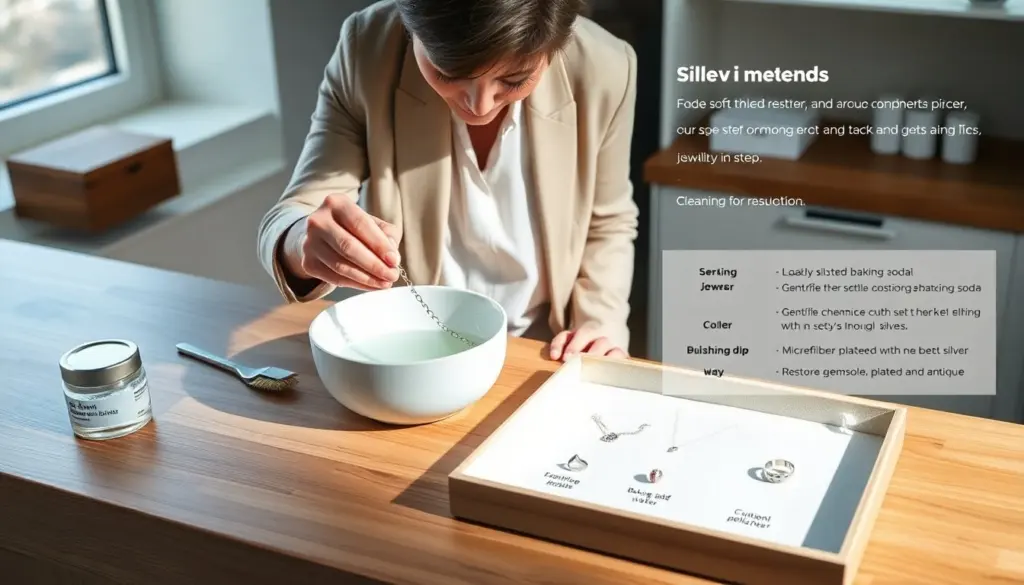
How to clean silver jewelry is a common question for people who own silver pieces. This guide explains safe, clear steps they can use today. It lists quick daily care and deeper home methods. It shows how to treat gemstone, plated, and antique silver. Each step uses simple supplies and plain directions. The reader will learn when to use each method and how to avoid damage. Read through the short daily routine, then the tested deep-clean options, and finish with targeted care and storage tips so you can confidently maintain pieces from simple chains to heirloom brooches.
Key Takeaways
- How to clean silver jewelry daily involves using mild soap, warm water, and a soft cloth to gently remove oils and light dirt without damaging the finish.
- Silver tarnishes due to reactions with sulfur compounds and should be inspected regularly for early signs like dull spots and darkening to prevent heavy tarnish.
- Deep cleaning methods such as baking soda soaks or chemical dips can remove stubborn tarnish but must be tested on hidden areas and followed by thorough rinsing to ensure safety.
- Special care is needed for gemstone, plated, and antique silver: clean gently around stones, avoid abrasives on plating, and preserve patina on antiques, consulting a professional when necessary.
- Storing silver jewelry away from moisture and wiping it after wear helps maintain shine and slows tarnishing effectively.
What Causes Silver Jewelry To Tarnish And How To Spot It Early
Silver jewelry tarnishes when silver reacts with sulfur compounds in air, skin oils, or some foods. The silver surface turns dull and then darkens to gray or black. The reaction speeds up in humid or polluted environments and around rubber, wool, or sulfur-containing household products. Frequent handling transfers oils and sweat that accelerate tarnish on frequently worn items such as rings and bracelets.
To spot tarnish early, inspect pieces after each wear. Look for dull spots near clasps, settings, and on undersides where moisture can collect. Check inside rings and beneath pendants where body oils accumulate. Early signs include loss of shine, a slightly darker sheen, or tiny discolored patches rather than uniform blackening. Spot-cleaning at this stage with a soft cloth and gentle soap prevents more difficult buildup. Keeping a simple checklist—inspect, wipe, store—helps make how to clean silver jewelry a quick habit and prevents heavy tarnish from forming.
Quick Daily Cleaning: Soap, Water, And A Soft Cloth
Daily care keeps silver jewelry from building heavy tarnish. The owner should mix a drop of mild liquid soap with warm water. He or she should dip a soft cloth, wring it, and wipe the piece gently. Rinse in clear water and dry immediately with a clean soft cloth to avoid water spots. For chains, work along the links, not against them, and open clasps when possible so the entire surface can be cleaned.
Tools and technique: use a lint-free microfiber or cotton polishing cloth, a soft-bristled toothbrush for crevices, and a shallow bowl for rinsing. Avoid tissues or paper towels that can scratch. Perform a quick five- to ten-second wipe after removing jewelry each day—this small habit dramatically reduces buildup. For items worn during exercise or in humid conditions, rinse sooner. Using the phrase how to clean silver jewelry as a mnemonic—soap, water, cloth—helps make the routine easy to remember and follow consistently.
Safe DIY Deep-Clean Methods You Can Do At Home
Home deep-clean methods work for tarnish that soap and water do not remove. The owner should test each method on an inconspicuous spot first and remove loose gemstones before any soak. Avoid strong abrasives on thin plating or soft details. Below are several widely used, safe approaches with clear steps and precautions so you can choose the right one for the degree of tarnish.
- Baking soda paste — Mix baking soda with a little water to a spreadable paste. Apply gently with a soft cloth or brush, rub lightly, then rinse and dry. Good for light-to-moderate tarnish and safe on most solid silver. Avoid vigorous scrubbing on engraved or satin-finished surfaces.
- Aluminum foil and baking soda soak — Line a bowl with aluminum foil, add hot water and a tablespoon of baking soda and salt, then place the silver on the foil so it contacts the metal. This electrochemical reaction can lift moderate tarnish; soak for a few minutes, rinse thoroughly, and dry. Test first on plated pieces—this method is best for sterling silver.
- Commercial silver dips — These are fast and effective for heavy tarnish but must be used briefly according to label instructions. Dip only for recommended time, rinse thoroughly to remove residue, and avoid prolonged exposure on plated or delicate items. Always use in a well-ventilated area and follow safety guidance on the product.
- Mild acid soaks (vinegar or lemon juice) — For tough tarnish on solid silver, a diluted vinegar or lemon juice soak for a short time can help. Neutralize and rinse well afterward. Do not use on porous gemstones, glued mounts, or plated surfaces.
After any deep clean, inspect settings and stones, polish gently with a soft cloth, and allow pieces to air-dry completely before storage. If tarnish resists these home methods, or if the piece is valuable or intricately made, consult a professional jeweler to avoid accidental damage. These steps answer common how to clean silver jewelry questions by matching method to metal type and condition.
Caring For Gemstone, Plated, And Antique Silver
Gemstone settings need gentler care than plain silver. Porous or heat-sensitive gems (opal, pearl, turquoise, amber) can be damaged by soaks, acids, or commercial dips. Remove pieces with glued-in stones before any soak and clean around stones with a damp cloth and a soft brush. For prong or bezel settings, gently push debris out from behind the stone using a soft brush rather than forcing heavy cleaning into the setting.
Plated silver requires minimal polishing and no abrasive paste. Long soaks and strong dips can wear away plating quickly; instead, wipe plated pieces after each wear and use a very mild soap solution. If plating is wearing thin, consider having the piece professionally replated rather than repeatedly polishing away the thin surface layer.
Antique silver often has a desirable patina that provides character and value. Avoid aggressive polishing that removes patina; instead, spot-clean only the most tarnished areas and preserve the overall finish. For valuable or fragile antiques, seek a conservator or jeweler experienced with historical pieces. When in doubt, document the piece with photos before any cleaning so you can track changes.
Final care and storage tips: store silver in airtight bags with anti-tarnish strips or silica gel packs, separate pieces to prevent scratches, and avoid storing silver near rubber, wool, or paints. Regular, gentle maintenance—knowing how to clean silver jewelry appropriately for each type—will keep pieces looking their best while preserving gemstones, plating, and antique finishes.