
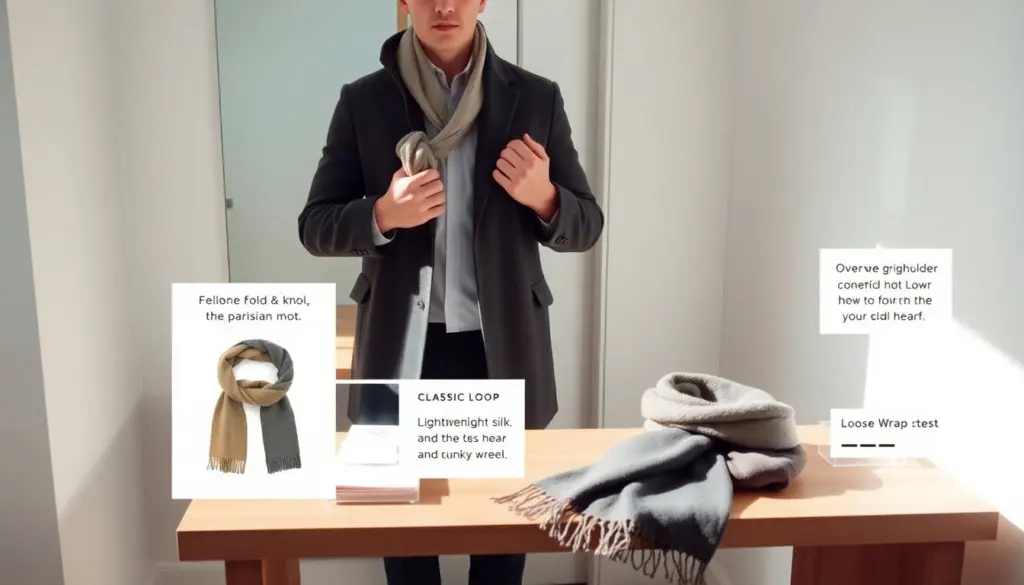
They search for how to tie a scarf around your neck to add warmth and style. The guide lists clear steps and simple tips. Each method fits common scarf types and outfits. The reader will learn quick knots, fit checks, and basic care. The instructions use plain language and direct steps so the reader can follow them fast.
Key Takeaways
- Choosing the right scarf fabric, length, and thickness is essential for comfort and style when learning how to tie a scarf around your neck.
- Master three quick ties—Classic Loop, Parisian Knot, and Loose Wrap—to easily enhance your everyday outfits with different scarf looks.
- Adjust knot tightness and position based on your collar style and scarf thickness for optimal comfort and appearance.
- Match scarf scale and color contrast with your coat to create a balanced and visually appealing ensemble.
- Proper scarf care, including following cleaning instructions and storing scarves carefully, maintains their shape and prolongs their lifespan.
- Use accessories like pins or brooches to secure slippery fabrics and keep scarf knots neat throughout the day.
Choose The Right Scarf: Fabric, Length, And Warmth
They choose a scarf based on weather and outfit. Wool and cashmere provide heat for cold days. Cotton and silk provide light coverage for cool mornings. They pick thickness by layering needs. They measure length by wrapping preference. A 60–70 inch scarf fits most wrap styles. A 30–40 inch scarf fits quick knots and neckerchief looks. They check width for proportion. Narrow scarves suit tailored coats. Wide scarves suit casual jackets and big collars. They test weight for comfort. Heavy scarves add bulk under coats. Light scarves sit flat under blazers. They match fabric to outfit texture. Silk pairs with smooth fabrics. Wool pairs with knitwear. They inspect fringe and edges. Neat edges hold knots better. They wash or dry clean per label to keep shape. They store scarves folded or rolled to avoid creases. They replace scarves that lose loft or show holes. They select a neutral color for frequent wear. They choose a bold color to change simple outfits. They pick patterns that scale with body size. Small patterns suit smaller frames. Large patterns suit taller frames.
Step-By-Step: 3 Quick Ties For Everyday Wear (Classic Loop, Parisian Knot, Loose Wrap)
Classic Loop: They fold the scarf in half. They place the fold at the left shoulder. They pull both ends through the fold. They tighten to comfort. They adjust height so the loop sits near the collarbone. They loosen for casual looks and tighten for warmth. Parisian Knot: They drape the scarf evenly around the neck. They cross the ends behind the neck and bring them forward. They tie a simple overhand knot near the throat. They pull one end through the knot once more to form a neat knot. They tuck ends under coat lapels for a clean line. Loose Wrap: They drape the scarf evenly around the neck. They wrap one end once around the neck. They let both ends hang in front. They pull the wrapped end slightly to loosen the loop. They spread the ends to show fabric and pattern. They use this for light warmth or style. Quick Tips For All Knots: They test knot tightness by inserting two fingers under the knot. They keep knots low for open collars. They keep knots higher for closed jackets. They balance ends so one side does not hang significantly longer unless they want an asymmetrical look. They use a mirror to check symmetry. They fix twisted fabric by flattening with fingers. They add a small pin or brooch to secure slippery fabrics like silk. They choose knot size to match scarf thickness. Small knots suit thick scarves. Larger knots suit thin scarves.
Style Tips, Fit Troubleshooting, And Scarf Care To Keep Knots Looking Sharp
Style Tips: They match scarf scale to coat scale. They keep thin scarves with slim lapels. They keep wide scarves with oversized coats. They coordinate color contrasts for visible impact. They layer a patterned scarf over a solid jacket for focus. Fit Troubleshooting: They find a tight knot causes discomfort. They loosen the knot and test again. They find a floppy knot hides fabric detail. They tighten slightly and reposition. They find ends uneven. They remeasure and even the ends before retightening. They find bulk under a collar. They choose a lighter scarf or adjust the knot higher. They find silk slips out of place. They add a small pin or use a tighter knot. Scarf Care: They read the label before cleaning. They hand wash silk and cotton when the label allows. They use gentle detergent and cool water for hand wash. They dry flat to keep shape. They dry clean wool and cashmere per label. They store scarves in a drawer or box to avoid dust. They fold scarves to prevent stretching. They mend small holes early to avoid larger damage. They remove pilling with a fabric shaver or comb designed for knitwear. They iron on low heat for cotton and silk using a cloth between the iron and fabric. They steam wool or cashmere to remove wrinkles without pressing. They replace scarves that smell or stain after cleaning. They rotate scarves to extend fabric life. They keep a neutral scarf for heavy use and a statement scarf for special looks.