
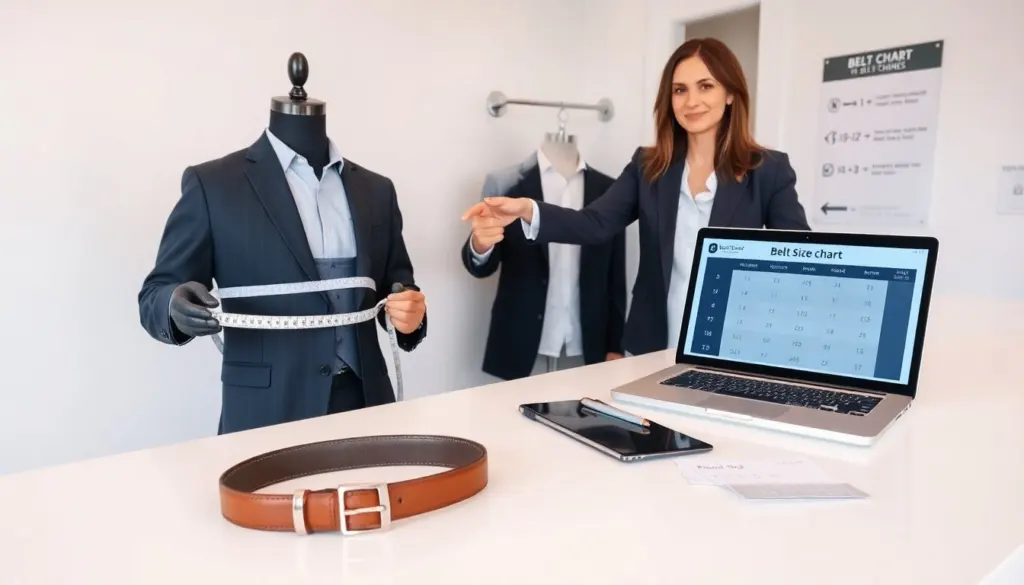
A belt size chart helps people find belts that fit. This belt size chart shows measurement methods, conversion rules, and fit tips. It lists waist, hip, and belt lengths for men, women, and kids. It explains how to measure an existing belt and how to convert sizes between US, UK, EU, and metric systems. The guide stays practical and clear.
Key Takeaways
- Use a belt size chart to accurately match waist or hip measurement plus 1-3 inches for an ideal belt fit.
- Measure existing belts from buckle base to the commonly used hole to confirm consistent sizing.
- Convert belt sizes between US, UK, EU, and metric systems using the chart and conversion rules for precise international orders.
- Men’s, women’s, and kids’ belt sizes vary widely; measure accordingly and consider style differences when selecting sizes.
- Try belts on with typical clothing and fasten at the middle hole to ensure comfort and proper fit.
- Adjust belts by punching new holes or trimming length as needed, and store belts properly to maintain shape and longevity.
How To Measure Your Belt Size Accurately
Measure the waist where the wearer normally wears a belt. Have the person stand upright. Use a soft tape measure and wrap it around the waist at the belt line. Record the measurement in inches and centimeters. Add two inches to the waist measurement for a standard belt fit. If the wearer prefers a tighter fit, add one inch instead. If they prefer a looser fit, add three inches.
Measure an existing belt if the wearer has one. Lay the belt flat and measure from the buckle base to the hole used most often. Record that length as the belt size. Compare that length to the waist measurement for consistency. Note that belt size numbers often refer to the distance to the middle hole.
Measure hip size for low-rise or hip-worn belts. Have the person stand and wrap the tape at the fullest part of the hips. Use that measurement with the same add-on rule (one to three inches) depending on desired fit.
Round measurements to the nearest half inch for easier shopping. Record both inches and centimeters to match international charts. Label each measurement with its intended wear position: waist or hip. This labeling avoids mismatches when ordering online.
Standard Belt Size Chart And International Conversions
Use the belt size chart to match measured length to standard sizes. The chart lists belt lengths in inches, centimeters, and common size labels (S, M, L, XL). For men, a 32-inch waist usually matches a 34-inch belt. For women, a 28-inch waist usually matches a 30-inch belt. For kids, follow age and waist guidance on the chart.
Convert sizes between regions with simple rules. Add two inches to the waist to get the US belt length in inches. Convert inches to centimeters by multiplying by 2.54. Match EU numeric sizes to US inches using the chart table. For UK sizes, use the same numeric system as the EU in many brands, but check brand notes.
Account for brand variation when using the belt size chart. Some brands list belt length to the buckle end. Others list length to the middle hole. Read the product notes before ordering. Check return policies when buying online. This step reduces the risk of size mismatch.
Keep a personal reference belt size chart. Record belt brand, model, and the hole used. Use this record to pick the right size next time. Update the chart if the person changes weight or preferred fit.
Men’s, Women’s, And Kids’ Size Ranges
Men’s belts commonly range from 30 inches to 44 inches in standard retail. Small sizes start near 30 inches. Large sizes reach 44 inches and above. Men with waist sizes outside that range should look for extended or custom belts.
Women’s belts commonly range from 24 inches to 40 inches. Fashion belts may use generic labels like S, M, and L. Use waist or hip measurements to choose between labeled sizes. Many women buy one size up for thicker layers or heavier fabric.
Kids’ belts use age and waist ranges. Typical sizes start at 18 inches for toddlers. Older children move into 24–28 inch ranges. Parents should measure the child at the waist where the belt will sit. Choose adjustable belts for growing children to extend useful life.
Note variation by style. Dress belts often fit closer and use narrower size increments. Casual belts may run larger and use wider holes. Wide fashion belts may require a different fit rule: check the brand’s size notes. Always compare the measured length to the brand’s specific belt size chart before purchasing.
Tips For Choosing The Right Fit And Adjusting Existing Belts
Choose a belt that matches the wearer’s typical clothing. For dress pants, pick a belt that sits at the waist. For jeans, pick a belt that sits at the hip. Match belt width to belt loops on the pants.
Try the belt with the typical outfit. Have the person wear the belt with the pants they will use most. Fasten the belt at the middle hole. Check comfort while standing, sitting, and bending. The wearer should still have room for one finger between the belt and the body.
Adjust an existing belt by punching a new hole if needed. Use a leather punch for leather belts and a cutter for fabric belts. Place new holes at equal spacing from existing holes. Mark the spot, then punch slowly to keep the hole clean.
Trim excess belt length if it hangs too far. Remove the buckle and cut the end that attaches to the buckle if the design allows. Reattach the buckle and secure the end with the original screws or fasteners. If the belt has a sealed end, use a tailor or cobbler to shorten it professionally.
Store belts flat or hang them to keep shape. Avoid tight rolls that create creases. Rotate belts to extend their life. Replace belts that show cracks near the holes or stretched leather to maintain a neat look.