
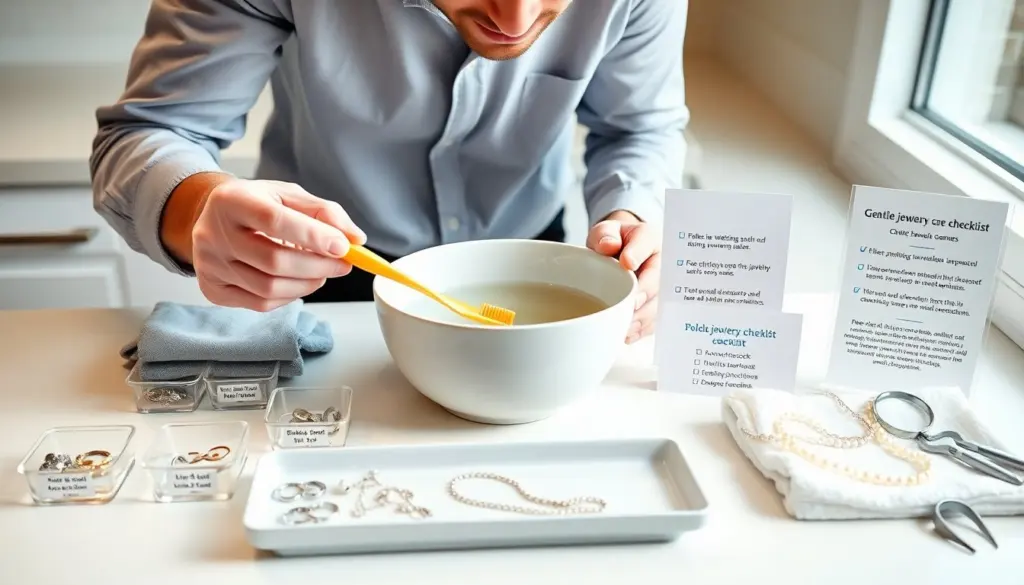
how to clean jewelry at home guides readers to safe, simple care. The article shows steps, tools, and time estimates. It lists do’s and don’ts for rings, necklaces, and earrings. It helps readers avoid damage and keep pieces bright. The guidance uses easy language and short steps. It focuses on common household items and clear precautions.
Key Takeaways
- Cleaning jewelry at home is safe and effective when using mild dish soap, warm water, and a soft toothbrush.
- Always inspect jewelry for loose stones or damage before cleaning and avoid harsh chemicals like bleach or ammonia.
- Silver, brass, and costume jewelry require different care methods, such as using baking soda paste for tarnished silver and avoiding soaking glued costume pieces.
- Gold and common gemstones should be soaked briefly and brushed gently, avoiding chlorine and heavy wear during cleaning.
- Delicate stones like pearls, opals, and emeralds need gentle wiping and avoidance of soaking or harsh cleaners to prevent damage.
- Hard gemstones such as diamonds, sapphires, and rubies can be cleaned with warm soapy water and may be suitable for ultrasonic cleaners if stones are intact and securely set.
Quick Safety Checklist Before You Start
Before anyone cleans jewelry at home they should check each piece. They should look for loose stones, weak prongs, and soft settings. They should note any glued elements, hollow parts, or parts with paint. If a piece shows major damage they should stop and consult a jeweler.
They should gather tools before they begin. They should use a soft cloth, a small bowl, a soft toothbrush, mild dish soap, and plain water. They should avoid bleach, ammonia, and strong acids unless a jeweler approves. They should use a separate container to soak small pieces to prevent loss.
They should work over a towel or a bowl to catch dropped items. They should remove watches and bracelets with push pins or springs that can pop open. They should remove layered pieces and store them in labeled compartments. They should wear gloves if they have sensitive skin.
They should test a small area first. They should rub a damp cloth on an unseen spot and check for color loss. They should stop cleaning if they see fading, clouding, or surface change. They should dry pieces fully before storage to prevent tarnish or water spots.
How To Clean Silver, Brass, And Costume Jewelry
To clean silver at home they should mix warm water with a drop of mild dish soap. They should soak the silver for two to five minutes. They should brush gently with a soft toothbrush on crevices. They should rinse with clean water and dry with a soft cloth. For heavy tarnish they should make a paste from baking soda and water, apply gently, rinse, and dry.
To clean brass at home they should use lemon juice and a pinch of salt or a paste of baking soda and water. They should rub with a soft cloth and rinse well. They should dry brass immediately to avoid water marks. They should test a small area first because some brass items have protective coatings.
To clean costume jewelry at home they should avoid soaking pieces with glued stones. They should dampen a cloth with soapy water and wipe surfaces. They should lift dirt with a soft toothbrush around metal links and settings. They should pat dry with a towel and air dry completely. They should avoid ultrasonic cleaners and steamers for glued or plated items.
They should store silver and brass in low-humidity areas. They should use anti-tarnish strips or cloth pouches. They should keep costume pieces separate to avoid scratching and plating wear.
How To Clean Gold And Common Gemstone Jewelry
To clean gold at home they should mix warm water with a few drops of dish soap. They should soak gold for five to ten minutes. They should brush gently with a soft toothbrush along chains and settings. They should rinse and dry with a lint-free cloth. They should polish gently with a jewelry cloth for extra shine.
They should avoid harsh chemicals on gold that include chlorine and bleach. They should remove gold rings before swimming and before heavy housework. They should check chains and clasps for wear during cleaning.
They should inspect gemstone settings before any soak. They should remove loose stones and set them aside for repair. They should use short soaks for most harder stones and wipe soft stones without submersion.
Delicate Gemstones: Pearls, Opals, Emeralds (Gentle Care)
They should treat pearls, opals, and emeralds with care. They should not soak pearls. They should wipe pearls with a damp cloth after wear. They should dry pearls flat on a towel. They should avoid perfume, hairspray, and acids near pearls.
They should clean opals with a damp cloth only. They should avoid rapid temperature change for opals. They should store opals away from heat and dry air.
They should treat emeralds like soft stones because many emeralds have oils or fills. They should clean emeralds with a damp cloth and mild soap if needed. They should avoid steam and ultrasonic cleaners for emeralds. They should ask a jeweler about re-oiling if an emerald looks dull.
Hard Gemstones: Diamonds, Sapphires, Rubies (More Robust Methods)
They should clean diamonds, sapphires, and rubies with warm soapy water and a soft brush. They should soak these stones for five to ten minutes to loosen dirt. They should brush under the stone and in the setting to remove oils and grime. They should rinse thoroughly and dry with a clean cloth.
They should feel safe using ultrasonic cleaners for many hard gemstones but they should check for fractures or fillers first. They should avoid ultrasonic cleaners for stones with chips or for stones set with glue. They should let a jeweler inspect unclear pieces before using a machine cleaner.
They should store hard gemstone jewelry separately in soft pouches to prevent scratching. They should schedule a professional inspection once a year to check prongs and settings.