
What size tv for living room should they choose in 2026? The guide gives clear steps. It explains how to measure distance, pick resolution, and fit the screen to the room. The guide aims to help readers pick a screen that fits sight lines, seating, and budget.
Key Takeaways
- Choosing the right size TV for living room starts with measuring your viewing distance and wall space accurately to ensure a good fit.
- Match the TV size to your seating distance: 1 to 1.5 times the screen diagonal for 4K TVs and 1.5 to 2.5 times for 1080p for optimal viewing clarity.
- Place the TV screen center at eye level and avoid reflective light to improve viewing comfort and perceived screen size.
- Select resolution based on usage: 4K for streaming and gaming, 1080p for budget-friendly options and older content.
- Test TV size at home with cardboard mockups to avoid common mistakes like buying a screen that’s too large for your space.
- Consider installation factors like ventilation, cable management, and professional mounting to ensure safety and neatness.
Measure Your Room First: How To Determine Viewing Distance And Available Wall Space
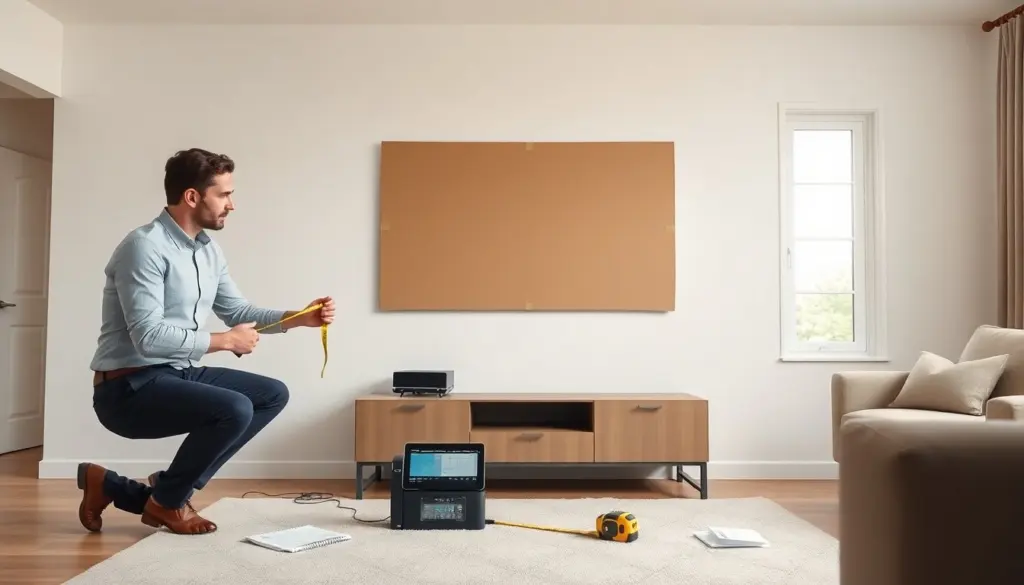
They measure the room first. They measure the viewing distance from the primary seat to the wall or stand. They divide that distance by 1.2 to 2.5 to estimate ideal diagonal screen inches. They measure wall height and width. They leave three to six inches above and below the screen for mounting and ventilation. They note window placement and light sources. They mark seating that moves, like recliners. They test the screen footprint with cardboard or tape. They compare the mockup to sight lines before they buy a TV for the living room.
Recommended Screen Sizes Based On Viewing Distance
They match screen size to viewing distance. For clear guidance they use resolution and distance together. For 1080p, they place the seat at about 1.5 to 2.5 times the screen diagonal. For 4K, they place the seat at about 1 to 1.5 times the diagonal. They choose the larger screen if they want immersive movies. They choose the smaller screen if the room is crowded or if the screen will sit near other furniture. They check that the chosen screen fits the wall and that the mount height stays within eye level for the main viewer. They confirm the choice by testing a cardboard mockup.
Layout, Seating, And Room Factors That Affect Perceived TV Size
They account for seating height and distance variation. They place the center of the screen at eye level when seated. They avoid placing the TV behind reflective light. They remember that wall color and furniture scale change perceived size. They use lower shelves or a thin mantel to keep the screen dominant without feeling huge. They prefer a simple layout with clear sight lines. They include extra margin if children or pets move seating. They check that audio equipment and cable runs fit without crowding the screen area.
Installation, Resolution, And Picture Quality Tradeoffs To Consider
They pick resolution for how they watch. They choose 4K for streaming, modern consoles, and future-proofing. They choose 1080p if they watch older cable and want to save money. They consider panel type: OLED gives deep blacks: LED/LCD gives higher brightness in sunlit rooms. They check HDR performance and color accuracy. They verify input lag if they game. They plan for cable length, power outlets, and ventilation. They hire a pro for complex mounts or in-wall wiring to ensure safety and clean cable routes.
Buying Tips And Common Mistakes To Avoid When Picking A Living Room TV
They compare size options in the store and at home with a mockup. They avoid buying the biggest screen without checking distance and wall fit. They avoid choosing only on price. They read reviews about real-world picture quality, not just specs. They check return policies and in-home trial options. They confirm available inputs and HDMI version for 4K@120Hz if they need it. They budget for a proper mount and sound. They remember that the right TV for the living room balances size, resolution, and room fit, not just the largest diagonal.