
How to clean gold jewelry is a common question for people who own rings, chains, and bracelets. This guide gives clear steps and safety tips. It shows when they can clean pieces at home and when they should get professional help. It uses plain language and tested methods to restore shine without harm.
Key Takeaways
- Cleaning gold jewelry at home is safe when using mild soap and warm water, avoiding harsh chemicals, and testing cleaners on a hidden spot first.
- Inspect gold pieces for damage like loose stones or bent prongs before cleaning and seek professional help if needed to protect the jewelry.
- Use a soft-bristled brush to gently clean solid gold jewelry, especially in crevices, and dry items thoroughly with a lint-free cloth for best results.
- Handle gemstone, enamel, and intricate settings with extra care by avoiding soaking sensitive stones and using recommended cleaning methods for each material.
- Professional cleaning is advised annually for antique or high-value gold jewelry, and damaged pieces should be repaired promptly to maintain their value and shine.
- Store gold jewelry separately in soft pouches, avoid exposure to chlorine and harsh environments, and remove jewelry before heavy work or swimming to prolong its life.
Quick Safety Checklist Before You Start
They should inspect each piece before they begin. Look for loose stones, bent prongs, or thin chains. If they see damage, they should stop and seek professional help. Remove watches and costume jewelry before any wet cleaning. They should test a hidden spot when they use a new cleaner. They should avoid harsh chemicals like bleach and ammonia. They should keep warm water below hand-hot to protect settings. They should work over a bowl or a towel to catch dropped pieces. They should wear gloves if they have cuts or sensitive skin. They should store cleaned pieces on a soft cloth to avoid scratches. Following this checklist will reduce risk and protect value.
Gentle At-Home Cleaning Methods You Can Trust
They can clean most solid gold pieces at home. They should use mild soap and warm water for safe results. They should avoid ultrasonic cleaners for thin gold or hollow items. They should limit abrasive scrubs and hard brushes. They should dry pieces fully after any wet cleaning. They should polish with a soft cloth to restore shine. They should repeat gentle cleaning every few months depending on wear. They should store gold away from hard surfaces to avoid future scratches. They should keep chemicals like chlorine away from gold to prevent dulling. They should confirm any method on a hidden area first to make sure it does not alter finish. These simple steps keep gold safe and shiny.
Soap-And-Warm-Water Technique For Solid Gold Pieces
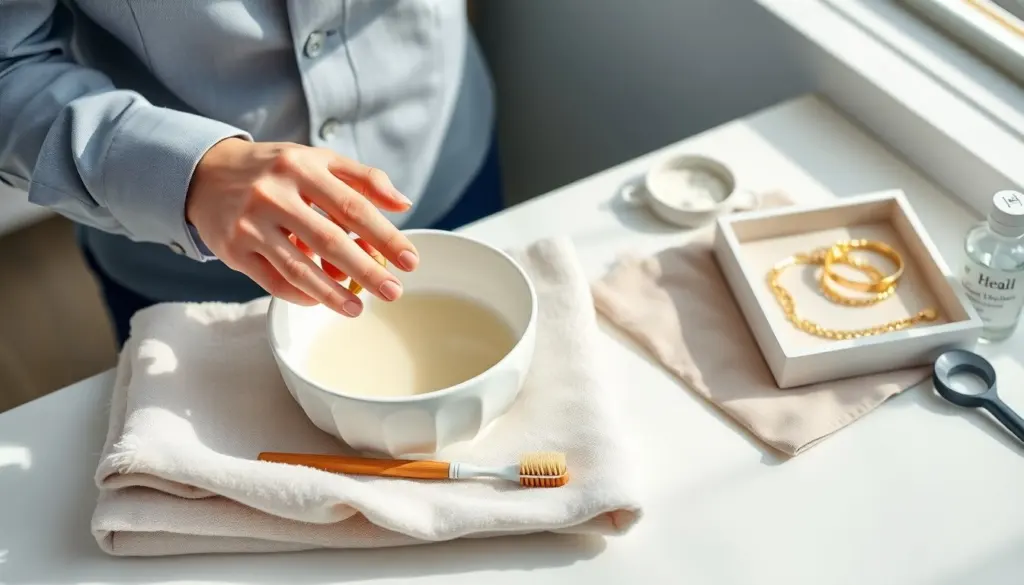
They should fill a bowl with warm water and a drop of mild dish soap. They should place gold pieces in the bowl and let them soak for five to ten minutes. They should use a soft-bristled brush to remove dirt from crevices. They should brush gently along the grain of the metal and around any engravings. They should rinse pieces under warm running water and hold them securely. They should pat pieces dry with a lint-free cloth and then air dry for a few minutes. They should buff the metal with a microfiber cloth for final shine. They should repeat this routine every two to four months or as needed. This method works well for solid gold rings, chains, and plain bracelets. It helps remove oils, lotions, and everyday grime without damage.
Cleaning Gold Jewelry With Gemstones, Enamel, And Intricate Settings
They should treat mixed-material pieces with care. They should identify each stone before they clean. They should avoid warm soapy water for porous stones like opal, emerald, pearl, and turquoise. They should not soak enamel or glued settings. They should use a damp cloth to wipe fragile surfaces. They should use a soft brush to remove debris from prongs and bezels when stones are secure. They should avoid steam for heat-sensitive stones and for pieces with internal adhesives. They should choose cleaners that the gem supplier or jeweler recommends for each stone. They should remove grime under settings by using a gentle brush and light pressure. They should check the back of settings for trapped dirt and rinse carefully when the stone tolerates water. They should dry these pieces quickly and store them separately to avoid contact damage.
When To Seek Professional Cleaning, Repair, And Long-Term Care Tips
They should bring pieces to a jeweler when they see loose stones or bent settings. They should schedule professional cleaning for antique or high-value items once a year. They should ask the jeweler about safe ultrasonic or steam options for their specific pieces. They should choose a jeweler who provides written inspection notes and repair estimates. They should repair weak links and worn clasps promptly to prevent loss. They should opt for rhodium plating when white gold loses its color. They should insure valuable pieces and photograph them before any repair. They should keep receipts and appraisals in a secure file. They should store gold in individual soft pouches to avoid scratches. They should avoid wearing gold in pools and hot tubs to limit chemical exposure. They should remove gold during heavy manual work to prevent bending and wear. They should follow these care steps to extend the life and shine of their jewelry.