
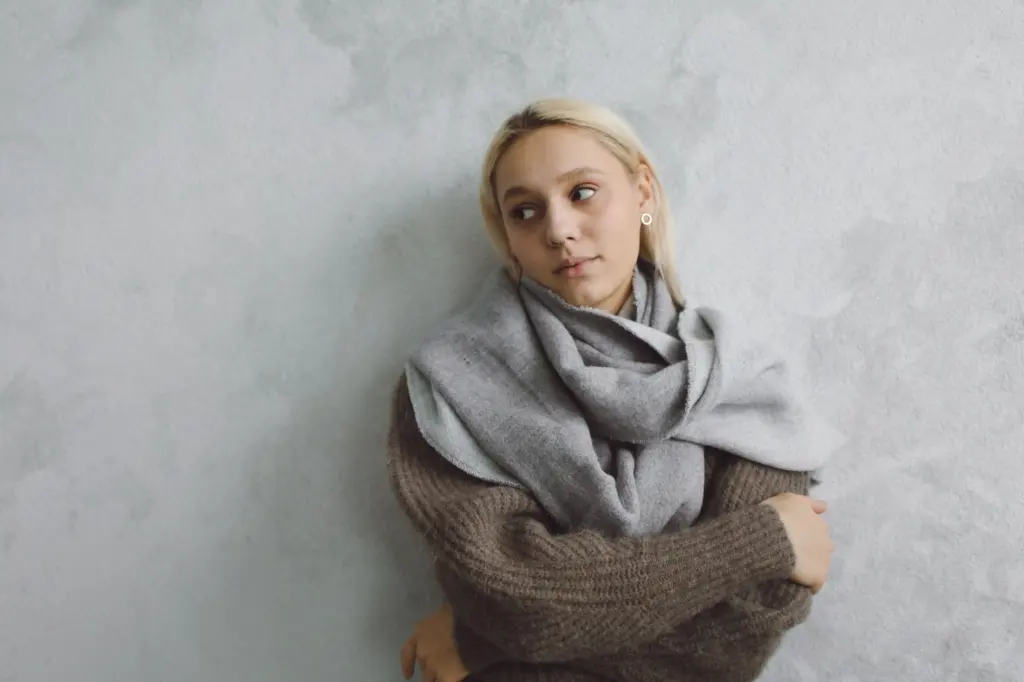
Unsure how to tie a scarf around your neck without it bunching or slipping? Match the knot to the scarf’s weight: simple drapes and loops for thick scarves, detailed knots for thin silk, and keep every knot slightly loose.
This guide belongs to our accessories series, which also covers how to choose a watch. Here the focus is one task: pairing each knot with the right fabric and length.
Matching the knot to the scarf’s weight
A common assumption is that any scarf can be tied in any knot. In practice the weight of the fabric decides what works. One scarf guide advises matching weight to knot: thick scarves suit simple drapes and loops, while thin silks hold detailed knots. The same guide notes that the Parisian knot works best with medium-weight scarves and that very thick knits get bulky in it. A knitwear maker makes the matching point from the other side: its simple loop method works particularly well with thicker scarves and blanket scarves.

That answers which knot suits a thick scarf: choose a loop, a drape or a wrap, and save compact, layered knots for lighter fabrics. The table below turns this into a quick choice.
| Scarf type | Knots that suit it | Planning use |
|---|---|---|
| Thick wool or blanket scarf | Simple drape, loop, once-around wrap | Pick an easy tie and let the fabric do the work; a very thick knit turns bulky in a Parisian knot. |
| Medium-weight scarf | Parisian knot | The knot can be adjusted from snug to loose, so it suits daily wear. |
| Long knit | Once-around wrap | Reserve it for very cold days. |
| Thin silk | Detailed knots, silk necklace style, neckerchief | Fine fabric holds a small, shaped knot; avoid wearing it tight for long periods. |
These pairings come from a scarf styling guide and a knitwear maker’s tying advice.
Scarf length and shape
Length is less a single measurement than a question of shape. Long rectangular scarves in wool, cashmere, merino or a long silk are the most versatile, so they are the safest first purchase if you want several knots from one scarf. Square silk or cotton scarves are smaller and lighter, and the same guide calls them great accessories. A tying guide from a style consultancy sorts scarves into three classic types: rectangle, large square and small square.

How much length you need depends on the knot:
- Infinity cowl: needs a long scarf, because the ends are tied together into a loop and the result is worn over the head.
- Once-around wrap: works best with a long knit, since one long end is wrapped around the neck.
- Simple knot: relies on a scarf that lets you leave one end much longer than the other.
- Neckerchief: uses a square scarf folded down to a narrow band, so a long scarf is unnecessary.
Everyday knots, step by step
Classic loop
This is the starting point for most people, and it suits any scarf that is not too thick to fold.
- Fold the scarf in half and drape it around your neck.
- Pull the loose ends through the loop created by the fold.
- Adjust until the scarf sits snugly but comfortably.
A scarf boutique describes this approach in its guide to stylish scarf ties.
Parisian knot
The Parisian knot, also called the French knot, is described as both practical and chic. It begins the same way as the classic loop, but the fold runs the length of the scarf.
- Fold the scarf in half lengthwise so there is a loop at one end.
- Drape it around your neck with the loop on one side.
- Pull the tails through the loop.
- Adjust to snug or loose.
The steps follow a scarf tying guide. A fashion blog adds that you can play with the tautness of the knot and the thickness of the scarf by doubling it. Doubling is useful with a lighter scarf that looks thin at the neck.
Simple drape
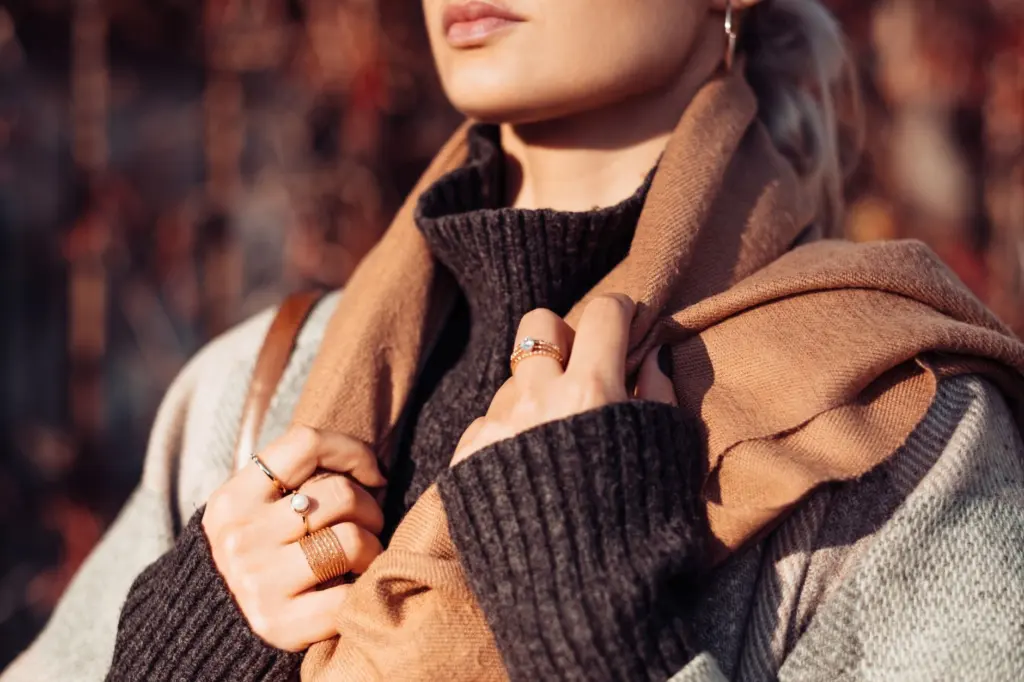
Let both ends fall evenly in front, either loose or tucked into your jacket. It is the easiest option of all and is ideal indoors or with an open coat.
Once-around and twice-around wraps
For the once-around wrap, take one long end and wrap it around the neck once. The scarf guide recommends it for very cold days, especially with a long knit, and a fashion blog describes the once-around knot as giving casual warmth for brisk days. The twice-around version gives extra warmth on cold days, but the same blog warns that it takes up a lot of room, so check that your jacket collar can close over it.
Loop and woven knots for thick wool
With a thick wool scarf, a knitwear maker’s primary guidance is to loop it around the neck once, then tuck the wound end over the top and through the loop. For the woven knot, loop the scarf once at the neck, twist the front loop, and feed both ends through. The simple knot is different: leave one end much longer than the other, then pass the long end over, under, up and over the short end.
Infinity cowl
An infinity scarf can be made from an ordinary long scarf. Tie the ends into a loop, twist it once into a figure eight, and loop it over your head. The result, in the words of the scarf guide, turns any long scarf into a cozy cowl.
Silk neckerchief and necklace style
Use a square silk or cotton scarf for the neckerchief. Fold it into a triangle, roll or fold from the long edge into a narrow band, wrap it around the neck, and tie a small knot at the front or side. Silk also works in a necklace style: fold it in half or thirds lengthwise and wrap it from back to front, letting the tails hang down.
Tight versus loose
Many people assume a tighter knot looks neater. The knitwear maker says the opposite: a scarf looks better if it is not too tight and can hang a little. For silk the argument is practical as well as visual, because the scarf guide warns that tight knots held for long periods can crease the fabric. Keep silk loose or choose a drape-style tie when you will wear it all day.
If your knot slides or flaps, change the knot rather than tightening it. The woven knot is designed to keep the ends in place. When you are building a full outfit, the same loose, relaxed approach goes well with eyewear, and our guide to Find Sunglasses That Fit Your Face: The Quick Style Guide For Men (2026) – Getoku covers that side of the look. Small accents such as rings follow their own sizing logic, and a ring size chart helps there.
Frequently asked questions
| Question | Answer |
|---|---|
| Which knot keeps scarf ends from flapping while I walk? | The woven knot. A knitwear maker says it keeps the scarf ends in place, so they won’t flap about when you walk. |
| Is a scarf only for warmth? | No. A scarf boutique points out that scarves are versatile fashion accessories that can transform an outfit, and light square silk or cotton scarves are a good example. |
| What should I do before wearing a new silk scarf? | Remove the label carefully. A style consultancy advises you to snip off the scarf label carefully, especially on silk, to avoid rips. |