
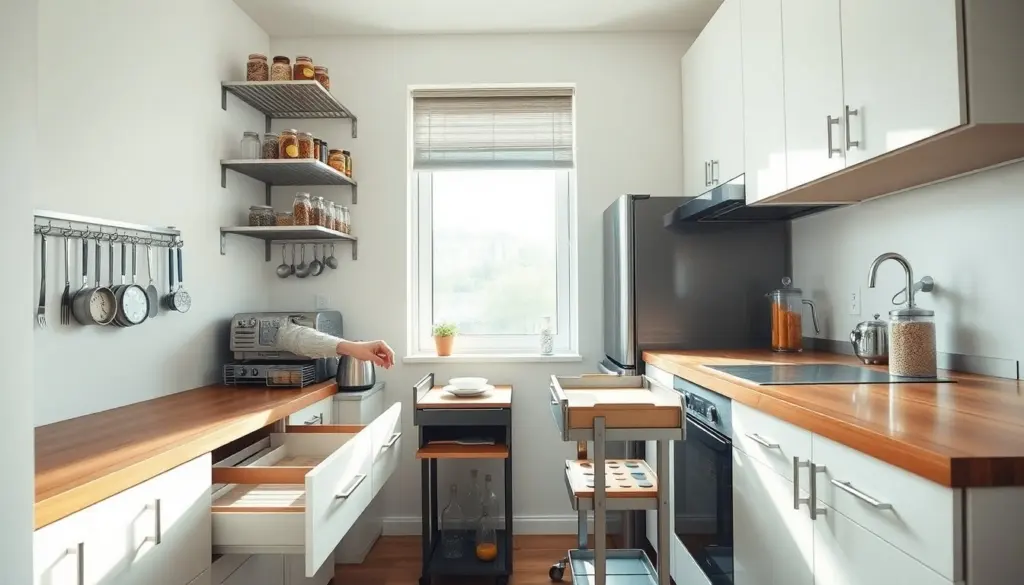
Small kitchen organization ideas help people use every inch. This article lists practical solutions that save space and cut clutter. It shows tools and habits that make small kitchens feel larger. The tips suit renters, small-home owners, and anyone who cooks in tight spaces. Readers will find clear steps, product types, and quick installs they can apply the same day.
Key Takeaways
- Small kitchen organization ideas prioritize maximizing vertical storage using open shelves and wall racks to free counter space and keep everyday items accessible.
- Optimizing cabinets with pull-outs, dividers, and lazy Susans creates efficient, accessible storage zones that speed meal prep and reduce clutter.
- Smart drawer inserts and vertical plate holders transform drawers and cabinets into neat, space-saving storage areas that protect dishes and simplify organization.
- Maintaining clear countertops by using appliance garages and rolling carts keeps the workspace open and flexible, enhancing kitchen usability.
- Labeling storage areas and managing cords with clips and power strips uphold long-term order and reduce cleanup time in small kitchens.
Maximize Vertical Storage With Open Shelving And Wall Racks
Open shelves free floor space and place everyday items at eye level. Homeowners install open shelving above counters to store plates, mugs, and jars. They choose strong brackets and place shelves 12 to 16 inches apart for plates and bowls. The same shelves hold baskets for snacks or small tools. The target keyword, small kitchen organization ideas, appears here as a reminder to use vertical space first.
Wall racks hold pans, utensils, and spices. People mount a rail under cabinets and hang hooks for ladles and spatulas. A magnetic knife strip mounts on an empty wall and frees drawer space. Open shelves and racks reduce cabinet crowding and make items easy to grab. They turn wasted wall space into active storage. Small kitchen organization ideas often start with walls because walls cost nothing and add storage quickly.
People mix closed and open storage. They place fragile items in cabinets and display durable items on shelves. They use uniform jars on shelves to create a clean look and reduce visual clutter. This approach helps small kitchens look tidy and functional.
Practical additions make vertical storage work better: measure available wall studs before installing heavy brackets, and use wall anchors for drywall to keep shelves secure. For renters, consider freestanding leaning shelves or removable adhesive rails that avoid permanent holes. Group items by frequency of use—reserve the lowest open shelf for daily cups and the highest for seasonal bakeware—to reduce step-stool trips. Add lightweight baskets or clear containers to corral packets and loose lids, and label each container for quick identification. Finally, leave a few inches of breathing room on shelves to prevent a cramped look; visual negative space makes a small kitchen feel larger.
Optimize Cabinets And Drawers With Pull‑Outs, Dividers, And Lazy Susans
Cabinet pull-outs bring items forward and remove the need to reach deep into dark corners. Install full-extension drawer slides so pots and pans slide out smoothly. Add tiered pull-outs in lower cabinets for baking sheets and cutting boards. These changes support efficient use and follow small kitchen organization ideas by making storage accessible.
Dividers keep lids, trays, and small tools upright and visible. People use adjustable dividers to adapt space when needs change. Drawer trays separate utensils and gadgets so users find what they need in seconds. Soft-close slides prevent banging and extend hardware life.
Lazy Susans make corner cabinets practical. People place spices, oils, or frequently used condiments on a rotating tray. A two-tier lazy Susan increases capacity and keeps items visible. For narrow cabinets, install vertical pull-outs for spices and oils. These units use deep but narrow spaces and follow small kitchen organization ideas by creating dedicated zones. Zones speed meal prep and reduce countertop mess.
To implement these ideas efficiently, map your cabinets by function—assign one cabinet for pots, one for food prep items, one for pantry overflow—and retrofit each with the appropriate hardware. Measure cabinet depth, height, and door swing before buying pull-outs or lazy Susans to ensure smooth operation. For budget-conscious updates, add stackable shelves, tension rods to separate baking sheets, or DIY pull-out trays on adhesive runner hardware. In rented kitchens where structural changes are limited, use freestanding narrow shelving that fits inside a cabinet or slide-out wire baskets that sit on existing shelves. Regularly purge duplicates and expired items so pull-outs and dividers stay useful rather than becoming a catch-all.
Smart Drawer Inserts And Vertical Plate Holders
Drawer inserts create order and protect dishes. People add silicone or wood inserts that fit around utensils and tools. These inserts stop items from shifting when drawers open and close. They also allow quick visual scans for needed tools. The phrase small kitchen organization ideas applies here as inserts transform chaotic drawers into neat storage.
Vertical plate holders save drawer and cabinet space. Users store plates upright like books in a deep drawer or cabinet. A simple rack keeps plates separated and prevents chips. Vertical storage also fits baking sheets and cutting boards in one slot each. People combine plate holders with dividers to build compact systems that match kitchen routines.
Use clear labels for inserts and shelves. Labels guide family members and guests. Clear labels keep systems working long term and reduce time spent searching for items.
Make inserts and vertical holders more effective by customizing compartments to the tools you actually use: designate a shallow insert for daily silverware, a narrow slot for measuring spoons, and a wider slot for electric hand mixers. Consider materials—rubber or silicone liners reduce noise and shifting, while bamboo or hardwood adds durability and a finished look. For delicate items, add felt or silicone padding inside vertical holders to prevent chips. If drawer depth is limited, convert a shallow bottom cabinet into a drawer by adding a rolling shelf kit so vertical plate storage becomes accessible at counter height. Periodically reorganize inserts seasonally to accommodate holiday cookware or to rotate seldom-used items into long-term storage.
Make Countertops Work For You: Declutter, Appliance Garage, And Rolling Carts
Counters must stay clear to keep a kitchen usable. People store seldom-used appliances in cabinets or an appliance garage. An appliance garage hides a toaster or coffee maker behind a roll-up door and frees countertop space. This tactic follows small kitchen organization ideas by keeping the workspace open and ready.
A designated prep zone keeps knives, boards, and oils in one area. People limit counter items to essentials and place everything else on a cart or in a cabinet. A compact rolling cart adds staging space and moves out of the way when not needed. Carts often include drawers, shelves, and a cutting board top. They add flexibility without a renovation.
Use cord clips and under-cabinet power strips to manage plugs and reduce visual clutter. People unplug and store small appliances when they finish cooking. They group daily items on a small tray to keep counters tidy. These small actions follow small kitchen organization ideas and reduce cleanup time.
Beyond daily routines, consider creating zones for specific tasks: a coffee station with a small tray, labeled canisters, and a dedicated outlet; a baking station with measuring tools and a pull-out ingredient bin; and a meal-planning station with a chalkboard or sticky-note spot on the wall. If space allows, install an under-counter appliance lift for stand mixers, or use a corner appliance garage to hide devices while keeping them accessible. When choosing a rolling cart, pick one with locking casters and a slim profile that can tuck into an alcove; use the cart to stage groceries when you return from shopping so counters remain clear. Lastly, adopt a 10-minute nightly reset: clear crumbs, return items to their zones, and wipe surfaces—this small habit preserves the gains from small kitchen organization ideas and keeps the space ready for the next day.