
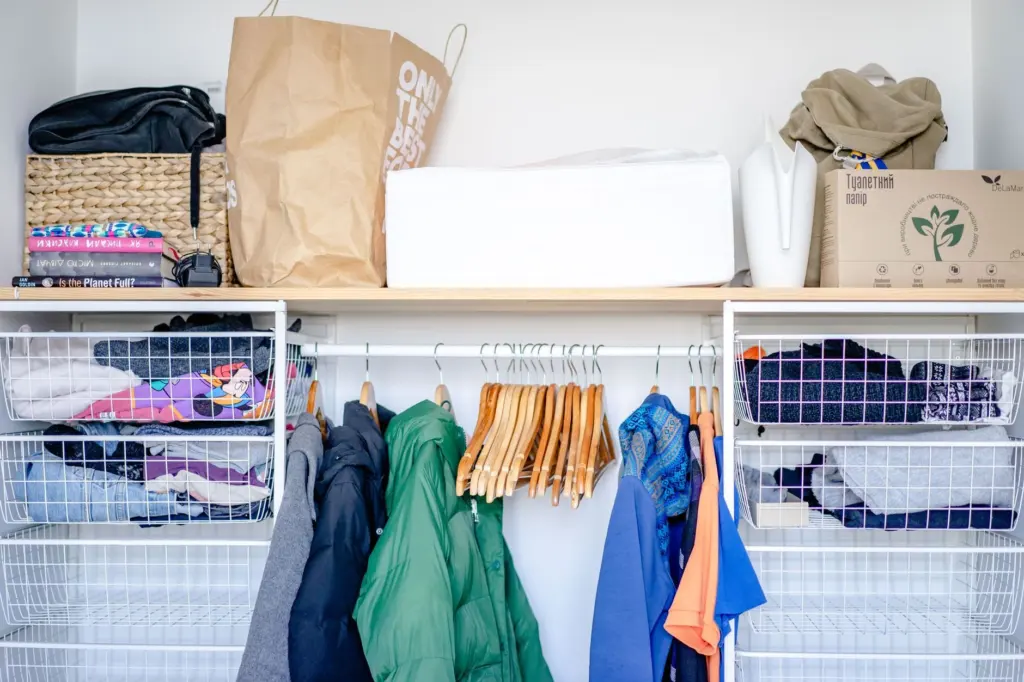
A heap of coats, shoes on the floor and a door that will not shut usually point to the wrong products rather than too little space. These coat closet organization ideas start by matching hooks, bins and hangers to the closet’s real dimensions.
The short answer for a small closet: measure depth, shelf thickness and door clearance first. Then add a vertical layer (a shelf, a cube unit or door storage) and give each kind of item its own place. Closet storage is one part of setting up a home, and the window side of that job is covered in how to choose curtains for a living room.
Closet dimensions that decide what fits
Depth and floor space
A standard coat closet is typically around 24 inches deep, according to a retailer’s coat closet guide. Use that as a planning baseline and measure your own closet. Every product below has to leave the door able to close, and depth is what decides that. The same guide says most coat closets can fit a shoe rack on the floor, so the floor is usually the first unused layer in a small closet.
Shelf thickness and shelf depth
Shelf accessories fail on small mismatches. A set of two chrome-finish shelf dividers is sold to fit standard 7/8-inch shelves, according to a closet-storage roundup. Measure your shelf thickness before ordering so the dividers do not wobble or refuse to slide on.
For depth, one entryway DIY used plywood cut to the width of the closet and about 14 inches deep. A shelf can span the whole closet width and still be much shallower than a typical coat closet. Nothing says a shelf has to match the full depth of the space.
Four assumptions that waste money
Most failed closet projects start with a purchase made before anyone measured. The table sets four common assumptions against what the evidence supports.
| Common assumption | What holds up | Planning use |
|---|---|---|
| Any over-the-door hook will work | In one small-closet makeover, the over-the-door metal piece was too thick for the door to close. | Check clearance with the door shut before you commit to hooks. |
| A coat closet has no room for shoes | Most coat closets can fit a shoe rack on the floor. | Test a floor rack before buying more shelving. |
| My closet is standard, so I can skip measuring | A standard coat closet is typically around 24 inches deep; typical is not guaranteed. | Treat the depth as a starting point and measure the closet itself. |
| A storage unit should fill the closet | A four-cube unit gave the right height for shorter coats and left space on the right for longer coats. | Size units to coat length and keep a full-height hanging bay. |
The measurements and observations come from a retailer’s coat closet guide and a small-closet makeover write-up.
Hangers: match the rail to the load
A matched set of hangers makes the rail easier to read, and it gives you a single weight rating to check. The weight rating matters more than the look. A pack of 30 velvet hangers listed at $20 supports up to 10 lbs per hanger, according to a closet-storage roundup. Treat that as a ceiling to compare against your heaviest coat, not as a target.
- Standard rail hangers: pick one style for everyday coats so the rail stays even, and confirm its stated load before buying a full pack.
- Multi-garment hangers: a space-saving design holds up to five garments per hanger and can flip vertically, listed at $14 (originally $17). It is worth trying where rail length is the limit.
- Accessory hangers: one design lets you hang several scarves and belts on each hook, sold at Wayfair. The retailer guide likewise recommends tiered hangers for storing several accessories while maximizing space.
Moving scarves and belts off the main rail frees hanging room for the coats themselves.

Shelves, cubes and dividers
Shelf storage suits items that should not hang, and the product type should follow what you need to store. Collapsible fabric storage cubes hold up to 20 pounds of clothing each and come as a set of six at $22 at Walmart, according to the same roundup. That makes them a flexible way to sort folded layers and accessories into categories. Shelf dividers, listed at $13 (originally $20) for a set of two, split a long shelf into zones without any bins.
For a very small closet, a cube unit can replace shelf work. One small-closet makeover used a four-cube unit with IKEA storage cubes for just under US$100. The unit stood at the right height for shorter coats and left enough space on the right for longer coats. The lesson is to size the unit around the coats you own, not around the biggest unit that fits.
Door and floor storage
The back of the door and the floor hold the most clutter and are the easiest to fix. An over-the-door shoe organizer with 24 clear pockets holds 12 pairs of shoes without using shelf space, and it is listed at $9 (originally $10), per the roundup. Clear pockets show the contents at a glance. A floor shoe rack handles the shoes that will not fit in pockets.
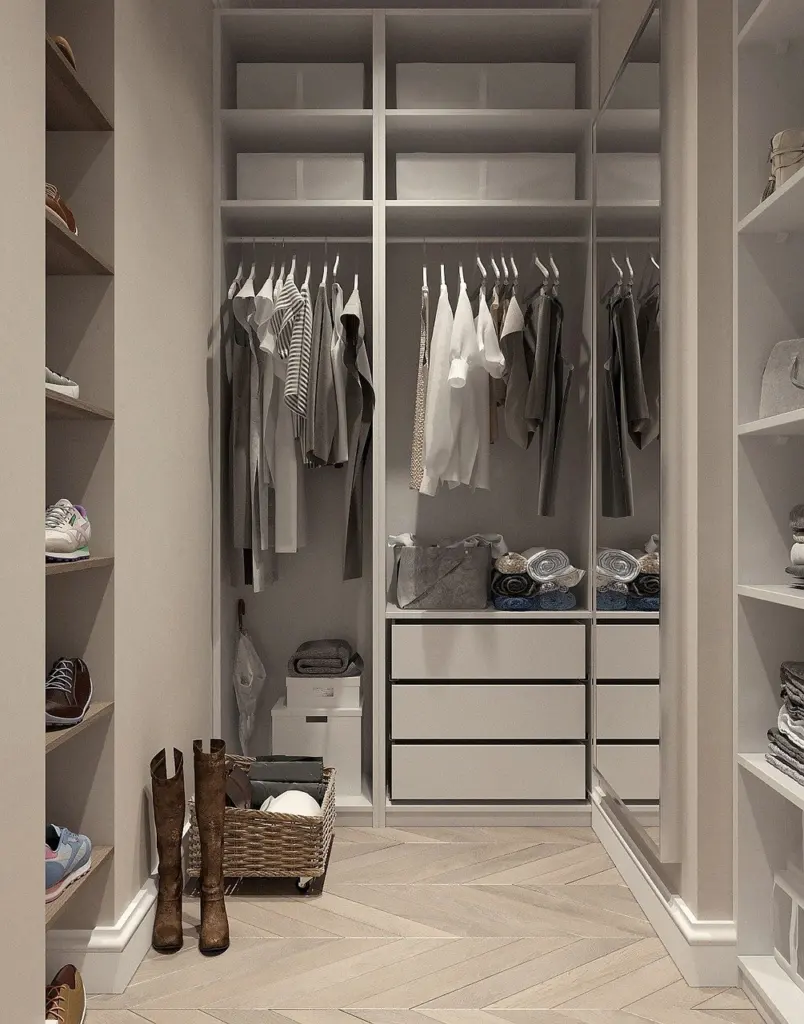
Over-door hooks need a stricter check than pockets. In the makeover described above, the over-the-door metal piece was too thick for the door to close. Close the door on any hook or organizer before you remove the packaging or commit to a pack of several.
Seasonal rotation
Seasonal rotation works when the in-season bin sits where you can reach it. The makeover above put summer and spring items on the top shelf and winter and fall items on the bottom. The bin for the current season stays at easier reach, and you swap bins at the change of season. Do the swap when you change the wardrobe, so the rail only holds what you actually wear.
Order of work for a small closet
The products that help most depend on what is cluttering the closet. Shoes call for a floor rack or door pockets, folded layers call for cubes, and an overcrowded rail calls for multi-garment or accessory hangers.
- Measure before buying. Record depth, shelf thickness and door clearance, since those decide which hooks, dividers and racks can work.
- Clear the floor and door. This is the cheapest place to gain room, and it shows how much rail and shelf space you still need.
- Add a shelf or cube unit last. Size it to your coat lengths so a full-height hanging bay remains.
- Standardize the rail. Switch hangers once the clutter is gone, so you buy the right quantity.
If this closet belongs to a first rental, First Apartment Checklist: The Ultimate Move-In Guide For New Renters (2026) – Getoku places closet storage inside the wider move-in plan. Students sharing a small room can compare notes in Dorm Room Essentials: The 2026 Checklist For A Comfortable, Productive First Year – Getoku.
Frequently asked questions
| Question | Answer |
|---|---|
| Can children use the closet themselves? | Yes, if the hooks are low enough. One retailer guide suggests installing hooks 36 to 48 inches off the ground for kids, and hanging over-the-door shoe storage where they can reach it. |
| Do vacuum bags help with off-season clothes? | They can. A six-pack holds up to eight sweaters per bag, according to a closet-storage roundup, which suits bulky knits better than coats. |
| How much does a small closet makeover cost? | One makeover cost just under US$100 for a four-cube unit and IKEA storage cubes. |
| What is a low-cost first purchase? | A door shoe organizer is listed at $9 for 12 pairs, per the roundup, but confirm that the door still closes with it hung. |