
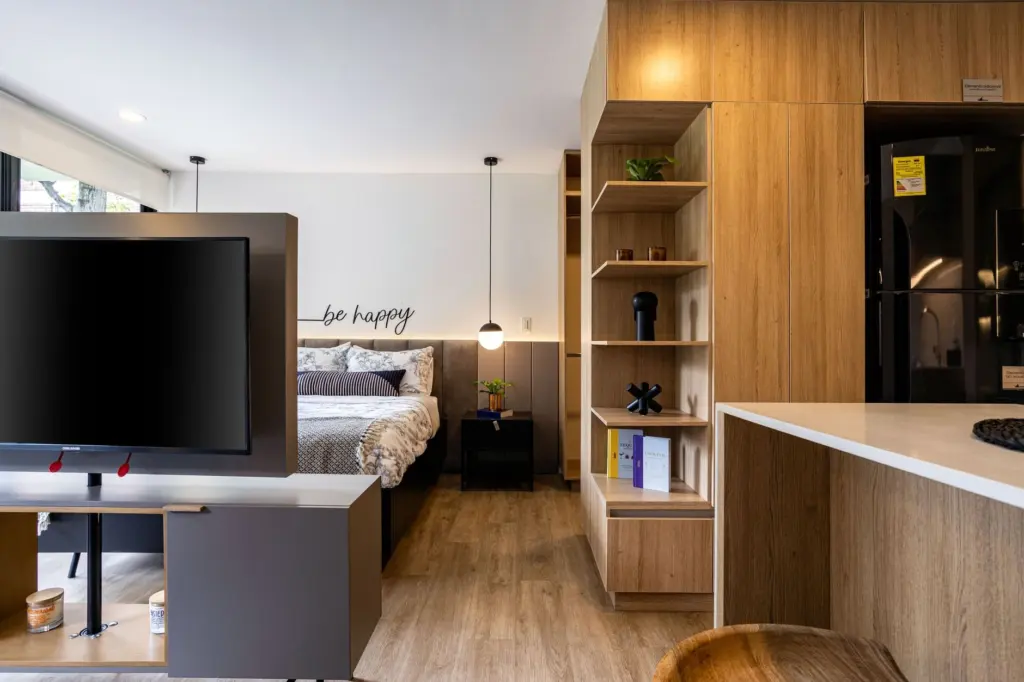
| Studio decision | Supported effect | Planning use |
|---|---|---|
| Murphy bed | Pops down each night and folds away as a cabinet, so the living room becomes a bedroom at night. | Choose it when floor space matters more by day than a permanently made bed does. |
| Daybed or convertible sofa | A daybed in sofa mode turns the bedroom into a living room for guests, and a convertible sofa gives seating by day and a bed at night. | Suits a studio where sleeping and lounging must share one footprint. |
| Freestanding room divider | Adds privacy and designates zones inside one room. | Use it where a bed or desk needs visual separation without building a wall. |
| Wallpaper and sliding doors | Wallpaper marks a wardrobe or workspace as a separate area, and closed sliding doors hide everything inside. | Use them to give a work or storage corner its own identity and a tidy face. |
| Wheeled storage under sofa and bed | Uses the often-forgotten space beneath sofa and bed. | Add it before buying more freestanding cabinets. |
Effects above are drawn from IKEA’s studio apartment gallery and Country Living’s studio decor ideas.
The most useful small studio apartment ideas start with zoning: give sleeping, lounging, working and storing each a defined spot, then choose furniture that can switch roles. Zones only work if the pieces serving them are flexible.
For a wider look at seating and living-area layouts, see Small Apartment Living Room Ideas: 15 Stylish, Space‑Savvy Tips For 2026 – Getoku. If your home also has outdoor space, Small Apartment Patio Ideas: 12 Stylish Ways To Transform Tiny Outdoor Spaces In 2026 – Getoku covers extending the living area outside.
Zoning a studio without building walls
A studio is a single 24-hour room, and IKEA notes that it needs flexible furnishings that make the most of a small space. Zoning is how that flexibility becomes a layout: Tiny House Blog advises creating specific areas for specific activities, such as separate zones for the bed and the sofa.
Freestanding and semi-solid dividers
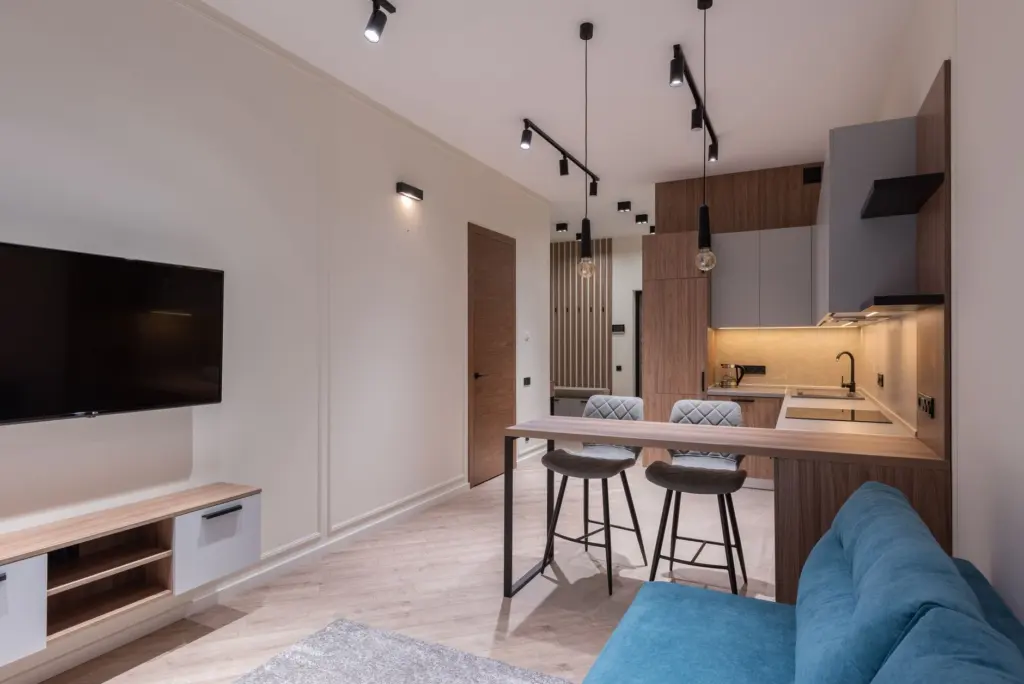
A room divider is the most direct zoning tool. Yahoo Shopping describes using one to designate zones, and Tiny House Blog suggests using dividers to enclose various areas of the space. The type of divider changes what you get:
- Solid or geometric screens add privacy, which suits a bed you want hidden from the front door. Country Living points to a freestanding DIY geometric divider for this job.
- Semi-solid dividers keep the room feeling connected. Country Living’s example is a wood pallet divider that still lets you peek into the next room, a better choice when you want separation but not a darker sleeping corner.
- Shelf dividers combine zoning with storage. Yahoo Shopping calls shelves a studio’s best friend, so a divider that holds books or baskets does two jobs at once.
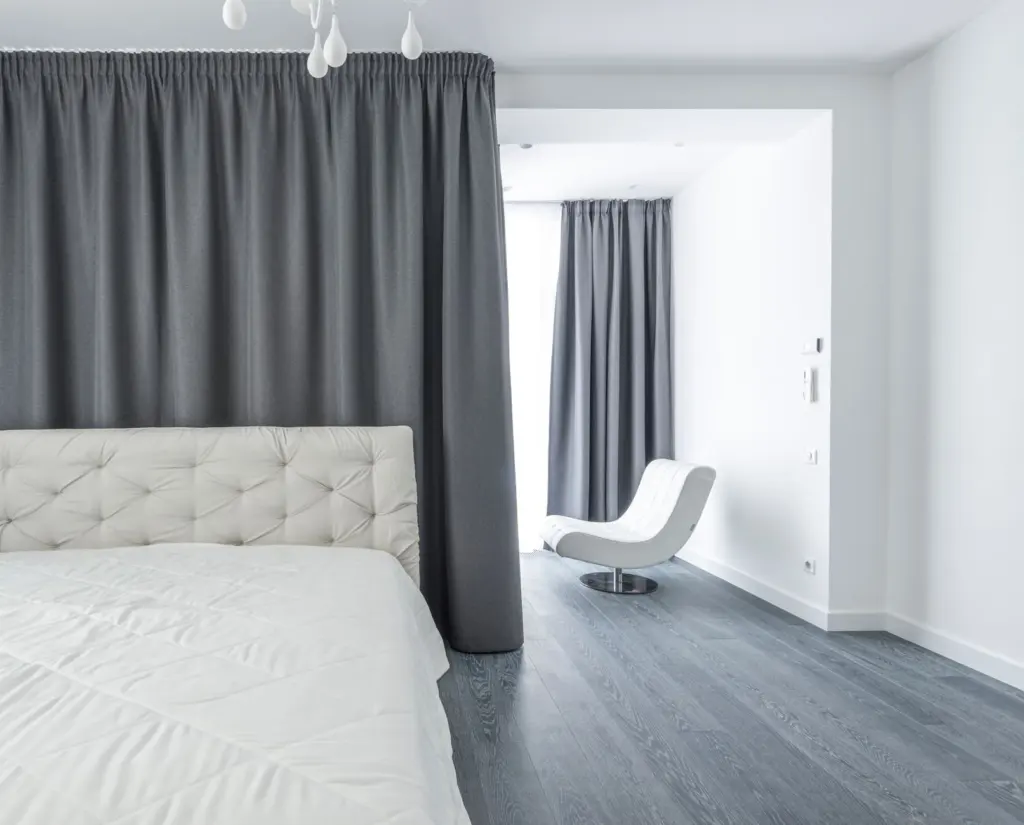
Pick a solid screen when privacy is the priority and a semi-solid or shelf version when light and sightlines matter more. A textile panel is another way to separate a bed from a lounge corner, as the image shows.
Wallpaper and sliding doors
Surfaces can define a zone as well as furniture. In IKEA’s studio, wallpaper in the wardrobe and workspace helps define it as a separate area, and closing the sliding doors hides everything away. The practical lesson is that a work corner can look like its own room by day and disappear at night, which matters when the desk sits near the bed.
Furniture that changes role through the day
Furniture is where zoning succeeds or fails, because a zone that needs permanent furniture takes floor space from every other zone. Choose pieces that serve more than one activity, and favour those that fold, extend or store.
Beds that disappear or convert
- Murphy bed. Country Living recommends one you can pop down each night, and Yahoo Shopping says it can transform the living room into a bedroom at night and is perfect for hosting overnight guests. It suits people who want a clear living zone by day and are willing to fold the bed away each morning.
- Daybed in sofa mode. IKEA shows the bedroom becoming a living room, ready for guests, once the daybed is in sofa mode. It suits a studio where the sleeping area also needs to host visitors.
- Convertible sofa. Country Living notes it provides extra seating during the day and an extra bed at night, a lower-effort choice than wall-mounted systems if you do not want to fold anything away.
Tables, ottomans and legs
A storage ottoman is the easiest multitasker. Tiny House Blog points out that chairs and ottomans with storage inside can hold blankets and pillows, and Country Living describes a tufted ottoman that extends into a futon when needed and stores away afterwards. For work and meals, Country Living suggests a pop-up coffee table that combines desk, table and coffee table and is tall enough to sit at.
Leg height is a quieter decision. Tiny House Blog advises furniture with legs that sits higher off the floor, which keeps the eye moving across the room. Favour raised pieces for large items such as sofas and consoles, and save low, solid-based furniture for places where you need concealed storage.
Adding storage in a studio
Country Living observes that in a studio you have to find ways to maximize every inch of your space. Storage is where that starts, and it works best when assigned to zones rather than scattered around.
Under, up and behind
- Under the bed and sofa. Country Living suggests storage on wheels for the space beneath both pieces, which are often forgotten.
- Upward. Yahoo Shopping recommends tall shelving units for display and storage, plus floating shelves and built-ins. Country Living mentions studios with 10-foot ceilings as an example where height and built storage become key, so check how much wall height you actually have before planning shelves.
- Behind doors. Closed sliding doors, as in the IKEA studio, hide a whole wardrobe or workspace at once and keep a zone looking calm.
- On wheels. A bar cart can hold books, plants and small decorative accents, according to Yahoo Shopping, so it can work as a movable shelf rather than only a drinks trolley.
Dimensions to plan around
IKEA’s studio lists a few concrete sizes that show how compact storage can be. Use them as reference points for your own measurements rather than as targets:
- SKUBB shoe box: 22x34x16 cm, small enough to slot into a shelf or closet.
- SKUBB organizer with 6 compartments: 35x45x125 cm, a tall, narrow footprint that adds storage without taking much floor.
- TJUSIG hanger: 78 cm long, a reminder to check the width of a wardrobe niche before choosing hanging storage.
Measure the wall, door swing and any under-bed gap before buying, then compare against sizes like these. A narrow, tall unit usually costs less floor than a wide, low one.
Light, mirrors and colour to support the zones
Light makes zoning feel generous rather than cramped. Tiny House Blog states that light always makes a space seem larger, and it recommends leaving windows bare or covering them only with sheer draperies so daylight comes through. If you need privacy or want to soften the glare, see how to choose curtains for a living room and apply the same logic to the studio’s main window.
The same source says lighter paint colours expand a space more than dark colours, and that a large mirror or several small mirrors placed strategically can make a small space feel lighter. Put a mirror where it picks up daylight, and keep darker colours for accent pieces or the zone you want to feel enclosed, such as a sleeping corner.
Choosing where to start
Start with the biggest conflict in the room. If the bed dominates the floor, a Murphy bed or convertible sofa is the first decision. If it is clutter, begin with under-bed storage, tall shelving or doors that close. If the room feels like a single undifferentiated space, add a divider or define a corner with wallpaper. Each fix supports the others, and a studio rarely needs all of them at once.
Frequently asked questions
Is a Murphy bed a good choice for a studio?
It suits people who want the living area clear by day. Yahoo Shopping describes it as space-saving and well suited to overnight guests, and Country Living says it folds away as a cabinet.
Will a room divider make the studio feel darker?
A solid screen can. A semi-solid style, such as a wood pallet divider that lets you see into the next room, keeps light and sightlines open.
Does ceiling height change what storage I should buy?
Yes. Country Living cites 10-foot ceilings as a case where height and built storage become key, so tall shelving is worth considering when the wall allows.
Can the wardrobe area double as a workspace?
IKEA’s studio does exactly this: wallpaper helps define the area, and closing the sliding doors hides everything away.