
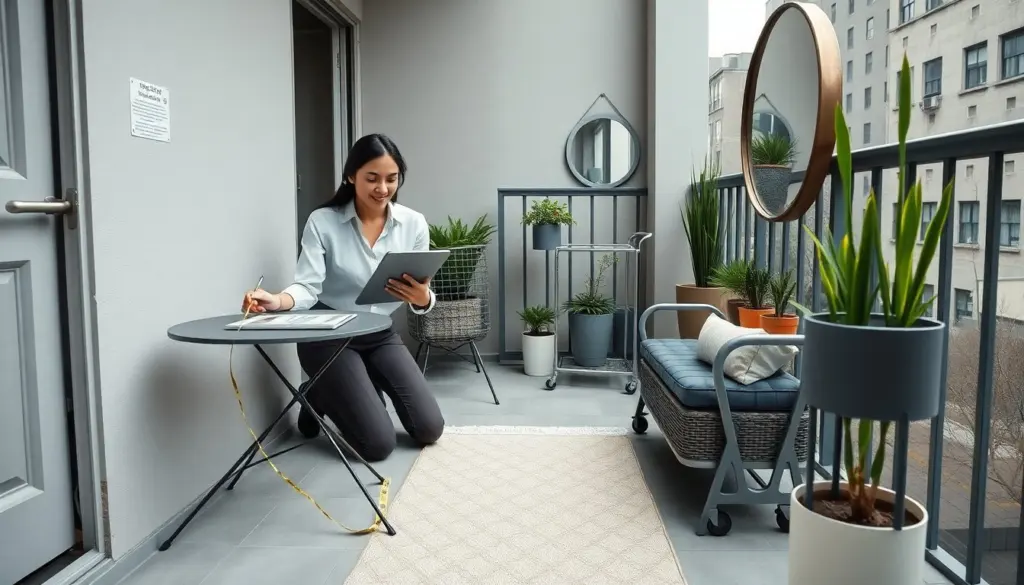
The reader wants small apartment patio ideas that work in tight spaces. This expanded guide lists practical steps and simple design moves with concrete examples you can act on immediately. It explains how to measure precisely, check building rules, choose compact and multifunctional furniture, and add plants and finishing touches that increase both function and perceived space. Each idea is written for balconies, Juliet patios, and narrow terraces so you can pick options to try this weekend.
Key Takeaways
- Measure twice: note clearances, door swing, and usable floor area before buying anything.
- Confirm building rules (weight limits, railing attachments, fire-safety restrictions) to avoid costly rework or fines.
- Decide on a single primary purpose—dining, lounging, or gardening—then layer secondary uses so the patio doesn’t feel cluttered.
- Use smart layouts (low furniture against walls, open bases, narrow circulation paths) and visual tricks (mirror, light rug, consistent pots) to make a small patio feel bigger.
- Favor space-saving and multifunctional furniture—fold-down tables, storage benches, nesting tables, and stackable chairs—for flexibility in tiny footprints.
- Maximize greenery with vertical planters, railing boxes, and groupings of pots chosen for light level and maintenance needs.
- Prioritize durable, weatherproof materials and removable textiles so the space is practical year-round.
Plan For Function First: Measure, Rules, And Purpose
Before shopping, measure the patio carefully: overall length and width, the width of door swings, step or threshold height, railing depth, and any fixed obstructions (HVAC units, vents, drain covers). Note the direction of sun and prevailing wind at different times of day—that will guide plant selection and where you place seating. Sketch a top-down plan to scale on graph paper or use a simple grid app so you can try furniture arrangements without buying first.
Check building rules and lease restrictions early. Confirm weight limits for balconies and rooftops, whether you may anchor planters or hang items from railings, and any fire-safety rules about open flames or propane. If you’re renting, ask your landlord about attaching hooks or drilling. Planning these details up front keeps your small apartment patio ideas realistic and legal.
Clarify purpose: a 4-foot-wide balcony can work well as a cozy bistro for two or a planting station, but rarely both at full scale. Choose a primary function (dining, lounging, or container gardening) and a short list of secondary uses (e.g., occasional workspace or extra storage). From there, list must-have items and a small budget. A clear purpose will help you prioritize foldable tables, stackable seating, or narrow planters that best support your chosen use.
Smart Layouts That Make A Small Patio Feel Bigger
Think sight lines: keep furniture low and near the edges to free the center. Place benches or seating on the long side of a narrow patio so feet can extend toward the middle rather than across a walkway. Use narrow, linear pieces—slim console tables or narrow bistro sets—so circulation paths stay at least 24–30 inches wide where people walk.
Use zoning to create purpose without partitions: define a dining nook with a small outdoor rug and a compact fold-down table, then create a plant or lounge corner that’s visually separate but close enough to serve as overflow seating. Mirrors mounted on an exterior wall or a glass divider reflect light and add perceived depth; a light-colored outdoor rug or decking tiles placed perpendicular to the long axis can also make the area feel larger.
Vertical thinking multiplies usable area: add shelves, a freestanding trellis, or tiered plant stands to lift greenery off the floor. Corner seating makes efficient use of awkward angles; a triangular bench or built-in ledge can provide both seating and storage. Keep pathways clear and avoid heavy solid bases—furniture with thin legs or open frames maintains an airy feel and makes the visual field seem less crowded.
Space-Saving Furniture And Multifunction Pieces
Select pieces that do double duty. Storage benches hold cushions and gardening supplies and serve as seating. Drop-leaf or wall-mounted fold-down tables provide dining space when needed and fold away to restore circulation. Nesting tables offer flexible surface area for drinks and snacks and tuck neatly when not in use. Stackable chairs are easy to store inside during bad weather.
Look for slim-profile furniture and items with open frames to keep sight lines clear. A slim bar cart can act as a serving station, a plant stand, or indoor storage when the weather turns. Railing-mounted tables and clamp-on side tables free floor area while giving you a usable surface—ideal for very narrow balconies. Choose outdoor cushions with quick-dry foam and removable covers so they can be stored or washed easily.
When choosing materials, favor low-maintenance, weather-resistant options—powder-coated metal, teak or composite slats, and synthetic wicker—so pieces withstand sun and moisture. If you want a weekend DIY: build a simple storage bench from untreated lumber with weatherproof sealant, or repurpose a tall, narrow shelving unit as a vertical planter and side table.
Greenery And Planters For Tight Spaces
Start with light and maintenance. South- and west-facing patios suit sun-loving species (succulents, lavender, rosemary), while north-facing or shaded spaces need tolerant plants (ferns, hostas, impatiens, coleus). Group pots by watering needs and choose drought-tolerant varieties for lower-maintenance arrangements.
Use vertical planters, railing boxes, hanging baskets, and tiered stands to maximize planting area without crowding the floor. Arrange pots in clusters with different heights to create depth: tall statement plants at the back, medium pots in the middle, and small herbs or succulents in front. Matching pot colors or a consistent material (terracotta, matte ceramic, or painted metal) unifies the look and reduces visual clutter.
Protect surfaces with trays or saucers and plan for drainage—elevate pots slightly so water can escape without damaging decking or balcony finishes. Consider self-watering planters or a simple drip bottle irrigation trick for weekend travelers. Add a compact trellis for vining plants to provide privacy and vertical greenery without taking floor space. Finished with string lights, a small outdoor-safe lantern, or solar stake lights, even a tight patio becomes an inviting, usable room outdoors.