
| Situation | What the guidance supports | Planning use |
|---|---|---|
| Standard adult-height closet | Baby clothes are smaller than adult clothes, so a standard closet leaves wasted space under the rod | Add a second shelf, a drawer unit or a double-hang setup |
| Newborn stage | Storage is mostly about access; double-hang rods suit tiny clothes | Keep daily items within easy reach and hang short garments in tiers |
| Toddler stage | Durability and flexibility matter more; later setups use fewer rods and more shelf space | Choose shelving you can reposition rather than a fixed layout |
| Size changes | Dividers can be labeled Newborn, 0-3 Months, 3-6 Months and so on | Sort by size band so the next size is ready before it is needed |
| Outgrown clothes | Sealed bags fit on a high closet shelf or under the crib | Move finished sizes out of the daily closet |
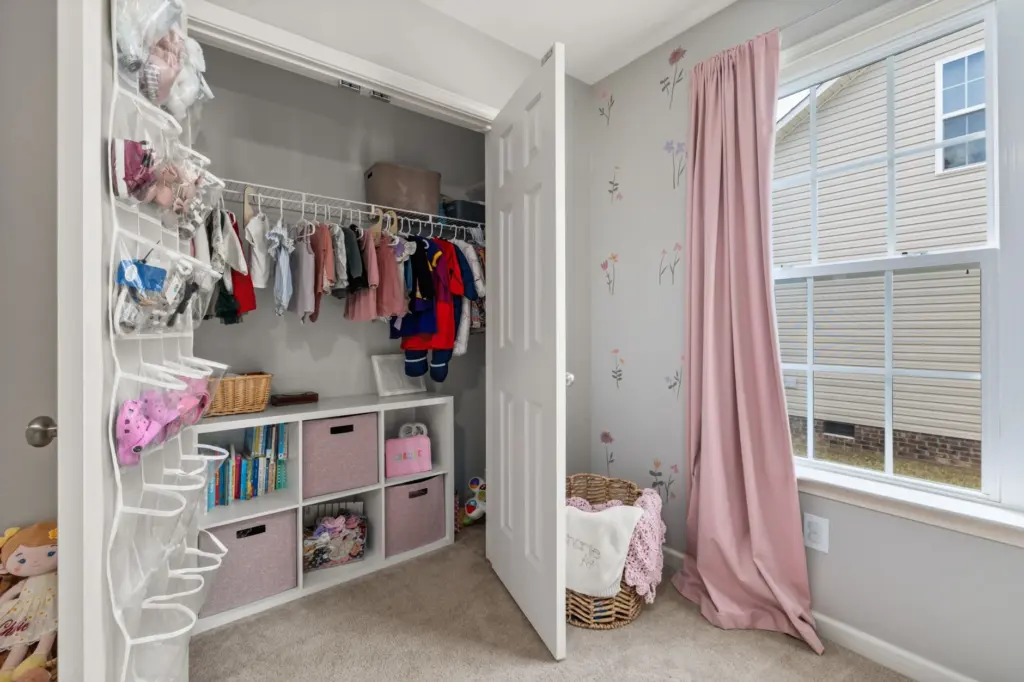
| Small essentials | An over-door shoe organizer can hold socks, pacifiers and other small items | Use the back of the door so shelves are free for bulkier items |
The table draws on a nursery closet organizer guide and a baby closet ideas guide.
Baby closet organization ideas work best when they follow growth stage: set up for quick access in the newborn months, then rework rods and shelves as the baby grows. The condition is that the storage can be changed.
That is also why a baby closet rewards flexible parts over a fixed build. Once the closet works, the nursery’s other decisions, such as how to choose curtains for a living room, sit in the wider home products and decor guide.
Why growth stage sets the layout
A baby closet has a different job at each stage, so the same layout stops working within months. Hiccapop’s guidance puts the shift plainly: newborn storage is about access, while the toddler stage calls for durability and flexibility. The practical result is that a closet planned only for the newborn weeks will need rebuilding, and a closet planned only for toddlers will make early nights harder than they need to be.
Newborn stage: access first
In the newborn months, you reach into the closet often and usually in a hurry. Anything you need daily belongs where you can grab it without moving other things. Tiny clothes are the reason double-hang rods suit this stage: short garments hang in tiers instead of leaving a tall empty gap under a single rod.
- Put daily items at reach height. Anything you use every day should not sit behind or beneath something else.
- Hang what hangs well. Small garments on a double-hang setup use space that a single rod wastes.
- Keep one size band visible. Labeled dividers show the current size and the next one at a glance.
Toddler stage: durability and flexibility
As the child grows, garments get longer and bulkier, and the closet usually needs fewer hanging rods and more shelf space. This is the point where a layout that was built around tiny hanging clothes becomes a constraint. Adjustable shelving helps here, because Renuity’s guidance recommends adjustable shelves to customize the space as your child grows.
- Choose parts you can move. Shelves and rods that can be repositioned let the same closet serve a newborn and a toddler.
- Favor sturdy over delicate. A toddler handles storage more roughly, so durable bins and shelving will outlast flimsy ones.
- Plan the rod change early. Knowing you will want fewer rods and more shelves later stops you buying fixtures you will remove.
Hanging, shelving and modular systems
The first decision is how to use the vertical space, because a standard closet is built for adult clothes. Hiccapop notes that baby clothes are physically smaller, so a standard closet leaves a lot of wasted space under the rod. The fixes it names are a second shelf, a drawer unit or a double-hang setup.
Using the space under the rod
Choose by what the closet already holds. If most of the wardrobe hangs, double-hang is the more direct answer, since it turns the dead space under one rod into a second hanging tier. If most of it folds, a drawer unit or extra shelf suits better. A hanging organizer with shelf compartments sits between the two: it uses the same vertical gap and holds folded pieces without any drilling.
Modular systems compared
If you want one system to last from newborn to toddler, two wall-mounted modular options appear in Hiccapop’s guidance.
- Elfa from The Container Store. It is wall-hung and flexible. You can set it with double-hang rods for newborn clothes, then move to fewer rods and more shelf space later. Hiccapop notes it is usually pricier than basic wire kits, so it suits parents who want the closet to change stage by stage rather than be replaced.
- IKEA Boaxel. It is wall-mounted, open and easy to rework as a child grows, with shelves, rods and mesh drawers. The trade-off is that stock can be inconsistent and it does not feel as substantial as a premium built-in, so it suits a tighter budget and a willingness to wait for the parts you want.
- Any adjustable-shelf or modular unit. Renuity advises modular storage units that can be reconfigured over time. The point is the ability to change, not the brand.
If neither system suits your budget, the cheaper route is the same idea at smaller scale: one extra shelf or a double-hang addition now, and a reconfiguration later.
Dividers, bins and the over-door pocket
Small, repeated items are where a baby closet tends to get messy, and three inexpensive tools handle most of it. Each works on a different kind of item, so they complement each other rather than compete.
- Size dividers for hanging clothes. Renuity suggests labeling dividers by size, for example Newborn, 0-3 Months and 3-6 Months. This turns the closet into a visible sequence, so you can see how many pieces remain in the current size and what is waiting in the next one.
- Clear bins for categories. Clear storage bins let you see what is inside without opening or pulling anything out. They suit items that pile up, such as socks, hats or bibs, where a closed container would hide what you own.
- An over-door organizer for small essentials. A simple over-the-door shoe organizer works well in a baby closet. Each pocket holds a small item, such as socks or pacifiers, and the door space would otherwise go unused.
Pick the over-door pocket if your shelves are already full and you mostly lose small things. Pick bins if the clutter is bulkier. Pick dividers if the real problem is knowing which size is next.
If bath-time supplies also need a home outside the nursery, the approach in Small Bathroom Closet Organization Ideas: 15 Smart, Space-Saving Solutions For 2026 – Getoku carries over to a compact space like this one.
Daily-use zones
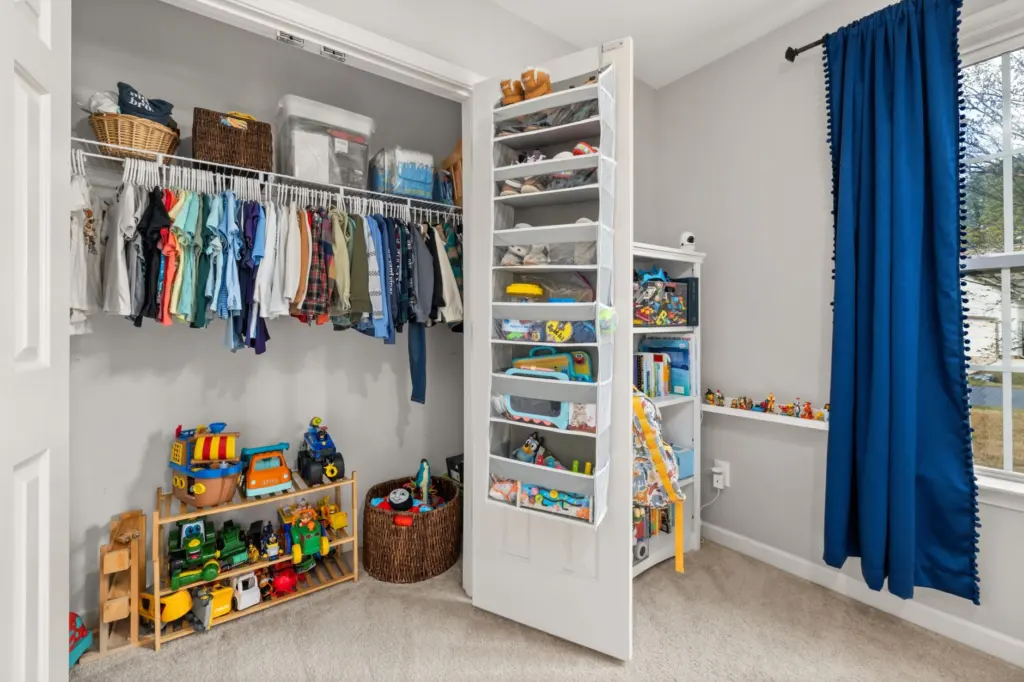
Zones keep the closet usable when you are tired. Group items by what you do with them, such as getting dressed, changing or storing the next size, and give each group its own bin or shelf. That way you are not searching through the whole closet for one item.
Within each bin or basket, Angie’s Roost recommends putting the least-used items at the back and the most-used at the front. The closet then adjusts itself to your routine: whatever you reach for first is the first thing your hand finds.
A small room makes this more important. Angie’s Roost describes a nursery that measures only 7 by 9 square feet, where storage has to be organized by use because there is no space for loose overflow. If your nursery is similarly tight, keep the daily zone in the closet and push everything else to high shelves or other rooms.
Feeding gear that lives in the kitchen can follow the approach in Small Kitchen Organization Ideas: 12 Clever Space‑Saving Solutions For Tiny Kitchens In 2026 – Getoku, which keeps the nursery closet for clothing and nursery essentials.
Outgrown clothes and seasonal rotation
Handle outgrown clothes by sorting them by size as soon as the baby moves up, then moving them out of the daily closet. Renuity’s guidance is to store them in sealed bags, label each bag, and keep the bags on a high closet shelf or under the crib to free up space.
That fits naturally with a size rotation. Because the dividers already follow size bands, you can think of the closet as a sequence:
- Move the band the baby has outgrown from the hanging rod into a labeled sealed bag.
- Store the bag on a high shelf or under the crib.
- Bring the next size band forward so it takes the place of the one you just removed.
Seasons add a second layer. Angie’s Roost moves most of the pants, sweaters and long-sleeved pajamas into a tote in summer, which leaves room for lighter clothes in the main closet. The same logic works in reverse when the weather turns cooler, and it keeps the closet limited to what the baby can wear now.
When a size band is finished, decide at once whether the bag is for a younger sibling or for passing on, rather than leaving it half-stored. A labeled bag with a clear destination takes up shelf space for a reason; an unlabeled one is just clutter in waiting.
Frequently asked questions
Is a modular closet system worth the extra cost?
It depends on how long you expect to use it. Hiccapop notes that Elfa is usually pricier than basic wire kits, but it can move from double-hang rods for newborn clothes to fewer rods and more shelves later. If you would otherwise replace the closet fittings at the next stage, the adaptability can justify the cost.
What should I look for in size dividers?
Renuity advises choosing dividers that are sturdy and easy to read and that fit standard closet rods. Labels with clear size bands, such as Newborn, 0-3 Months and 3-6 Months, make them useful.
Is the IKEA Boaxel system a reliable choice?
It is a flexible, open, wall-mounted system that is easy to rework as a child grows. Hiccapop cautions that stock can be inconsistent and that it does not feel as substantial as a premium built-in, so check availability of the parts you need before committing to a layout.
How do I stop frequently used items getting buried?
Angie’s Roost suggests keeping the pieces you grab most often toward the front of each bin and stashing seldom-worn items at the rear. Reorder them when the baby’s routine changes.