
| Decision | Guideline | Planning use |
|---|---|---|
| Curtain width, small to medium windows | 1.5 to 2 times the window width | Compare the total fabric width of all panels with your window measurement before you buy. |
| Curtain width, large windows and sliding glass doors | At least double the window or door width | Treat double as the floor for wide glass, not a generous option. |
| Length, apron style | Ends about 2-3 in above the floor | The clean, tailored finish; fabric stays off the floor. |
| Rod height | 4-6 in (10-15 cm) above the window frame | Mark the wall before drilling any holes. |
| Rod overhang | Extends 8-12 in (20-30 cm) beyond each side of the frame | Check the wall space beside the window before you choose a rod length. |
| Rug under seating | Front legs of all seating on the rug, at the very least | Treat this as the minimum, and aim for all legs on the rug where space allows. |
Width and apron-length figures come from a curtain measurement chart, while rod placement and rug guidance come from a living room rugs and curtains guide.
Start with how to choose curtains for a living room by measuring the window first, then match width, length and fabric to your light and privacy needs. Rugs, lighting and storage follow the same room-first logic.
For a closer walk through the tape-measure steps, read how to measure for curtains alongside this overview. The sections below start with curtains, then cover rugs, light, small-room tricks and storage, and finish with guides for particular living situations.
Curtains: width, rod placement and length
Choose living room curtains by working outward from the window. Settle how much fabric you want across the glass, fix the rod position, and only then decide on length and fabric. That order stops an attractive panel turning out too narrow or too short once it is on the wall.
Width and fullness
Width is the choice that most changes how curtains look. A curtain measurement chart says the curtain width should be 1.5 to 2 times the window width for a nicely gathered look on small to medium windows. For large windows and sliding glass doors it says the curtain width should be at least double the window or door width.
- Small to medium windows: aim inside the 1.5 to 2 times range. A ready-made pair at the bottom of that range is a sensible budget choice, while the top of the range gives the fuller, softer drape.
- Large windows and doors: treat double the opening as the starting point. A pair that only just spans the glass will not give the gathered look the chart describes.
- Measuring allowance: a curtain retailer’s guide adds 3-6 inches to the width measurement for curtains and 6-12 inches for drapes to allow for fullness. It adds 6-12 inches to the depth measurement for curtains and 12-24 inches for drapes.
The decision rule is simple. Measure the window, work out the fullness you want, and compare it with the combined width of every panel in the pack, not the width of a single panel. If the pack falls short, a wider size or an extra pair is a better fix than stretching panels to fit.
Rod height and overhang
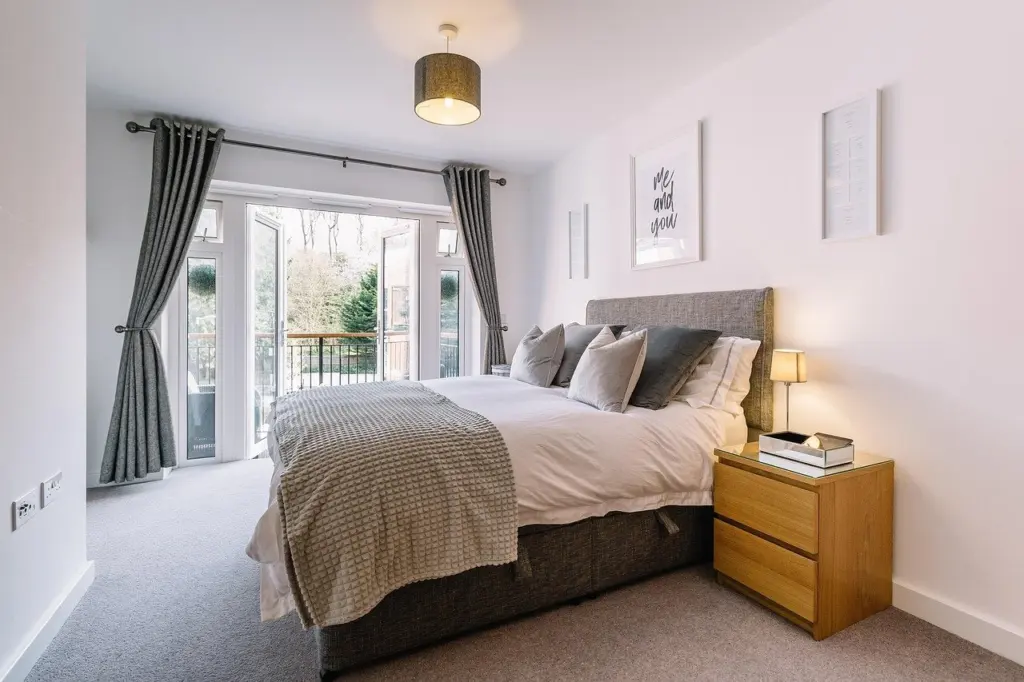
Rod position decides whether a window looks tall and wide or cramped. The living room guide says to fix the pole 10 to 15 cm (4 to 6 inches) above the window frame. It also says to extend it 20 to 30 cm (8 to 12 inches) beyond each side.
For small rooms, a curtain retailer’s room-by-room guide goes a step further. It advises mounting rods close to the ceiling and extending them beyond the window frame, which makes windows and ceilings look larger. If your ceiling is low and the room feels tight, lean toward the higher end of the placement. If a bulky radiator, shelf or door frame limits the wall, stay with the guide’s overhang figures and check the space on each side before you buy.
Length and hem style
Length is a style decision as much as a measurement. The chart describes an apron length as ending about 2-3 inches above the floor for a clean look. For a puddle effect it gives a common guideline of adding 6-12 inches for a moderate puddle.
Choose apron length if you want a tailored finish and fabric that stays off the floor. Choose a puddle only if you deliberately want a fuller, more relaxed look and are comfortable with fabric resting on the floor. The same chart pairs door height with curtain length for floor-to-ceiling hangs.
- 7 ft door: about 84 in.
- 8 ft door: about 96 in, which the chart describes as a polished appearance.
- 9 ft door: about 108 in.
- 10 ft door: about 120 in.
Measure from the rod position, not the top of the window, because the rod height you chose earlier changes the drop.
Rod size and strength
The chart groups rod widths by the size of the opening, and the ranges overlap:
- 28-48 in: small windows and doors.
- 48-84 in: medium windows.
- 66-120 in: large windows.
- 120-170 in: extra-wide openings.
- 170-240 in: very large openings.
For a window near a boundary between sizes, use the side overhang you need to decide which rod length suits the wall. Rod thickness comes in a slim 0.75 inch, a standard 1 inch, a thick 1.25-1.50 inches and a double rod of 2 inches. The chart notes that standard rods handle a range of weights and styles. Fabric weight affects the choice of rod, so settle the fabric first, as the next section explains.
Fabric choices for curtains
Choose fabric by the job it must do in the room, then check that the hardware can carry it. A living room usually needs one of three things: a soft daylight filter, a relaxed everyday look or a dressier statement.
| Fabric | Effect described | Planning use |
|---|---|---|
| Linen | Soft, brings a relaxed feeling | Suits bright, casual rooms. |
| Velvet | Adds luxury and a theatrical effect | Suits a dressier, more dramatic living room. |
| Sheers | Let in substantial amounts of sunlight | Suit rooms where daylight is the priority. |
| Heavy fabrics (any type) | Create a larger stack when open | Confirm the rod and brackets can support them before you order. |
The first three rows come from a living room curtain guide. The heavy-fabric row comes from a curtain fabric selection guide.
Matching fabric to the room
- Daylight first: sheers keep the most sunlight in the room. They suit a living room you mainly use in the daytime, and they work well in layers when you want a soft backdrop.
- Mood first: linen suits a bright, casual room, and velvet suits a room where you want a more formal, theatrical effect. Pick the one that matches how you want the room to feel, not simply which looks richer in a photograph.
- Hardware first: a heavier fabric means a bigger stack of cloth beside the window when the curtain is open. Leave enough wall space beside the frame for that stack, and check the rod and brackets for strength. A rod that suits a light panel may not suit a heavy one.
Colour and pattern follow from the room’s light, which the lighting section covers further down. Fabric is the point where practical and visual choices meet, so decide it before you commit to a rod.
Care by material
Care depends on fabric, so check each product before you buy. A curtain that must be dry cleaned costs more to maintain than one you can wash at home. The retailer’s care guide separates the methods clearly.
Washable curtains
For washable curtains, soak them and gently agitate. Then wash in cold or warm water with a mild detergent. The guide warns against fabric softener, which can damage some fabrics. Use a mild detergent even when a curtain looks only lightly dusty.
Cotton and linen
The guide says to air fluff cotton or linen curtains in the tumble dryer on low heat, removing them while slightly damp. The practical consequence is that cotton and linen suit households happy to hang curtains back up straight from the dryer, but not households that want a no-handling option.
Dry-clean-only curtains
Where the label says dry clean only, the guide advises vacuuming thoroughly before storing to remove built-up dirt and grime. Take them to a professional cleaner when they are visibly soiled. If you want low-effort care, this category is the one to avoid in a busy living room.
Rugs: size, placement and fibre
The rug should be big enough to anchor the whole seating group. The living room guide says the rug should be large enough for all seating legs, and at the very least the front legs of all seating should be on it.
Sizing against seating
Measure the footprint of the seating group, not the whole room, then choose the largest rug that fits comfortably. The guide warns that a rug that is too small makes a large room look choppy. Undersizing is therefore the more serious mistake in a bigger room, because it leaves the furniture looking like separate islands. If budget forces a smaller rug, keep to the minimum rule so the front legs of every seat sit on it.
Rugs also follow the same orientation logic as curtains, which the lighting section explains. Choose the rug with the window treatment in mind, since the two sit in the same field of view.
Fibre and cleaning
For everyday living rooms, the guide says polypropylene and polyester are stain-resistant and easy to clean. If you have children, pets or regular guests, those fibres are the practical starting point. If you prefer a different fibre for look or feel, plan for more careful cleaning and check the label before using a cleaning product.
Lighting, daylight and colour
Lighting in the living room begins with the daylight the windows let in, because that decides how your curtain and rug colours will look. The guide says north-facing rooms get cooler, bluer light, so it recommends warm-toned rugs and curtains. It adds that south-facing rooms get warm, golden light.
Check which way the room faces before you choose colours. Look at the existing walls and floor at the time of day you use the room most, and compare any fabric swatch in that light. Sheers let in substantial amounts of sunlight, so they will show a room’s natural light colour more strongly than a heavier curtain.
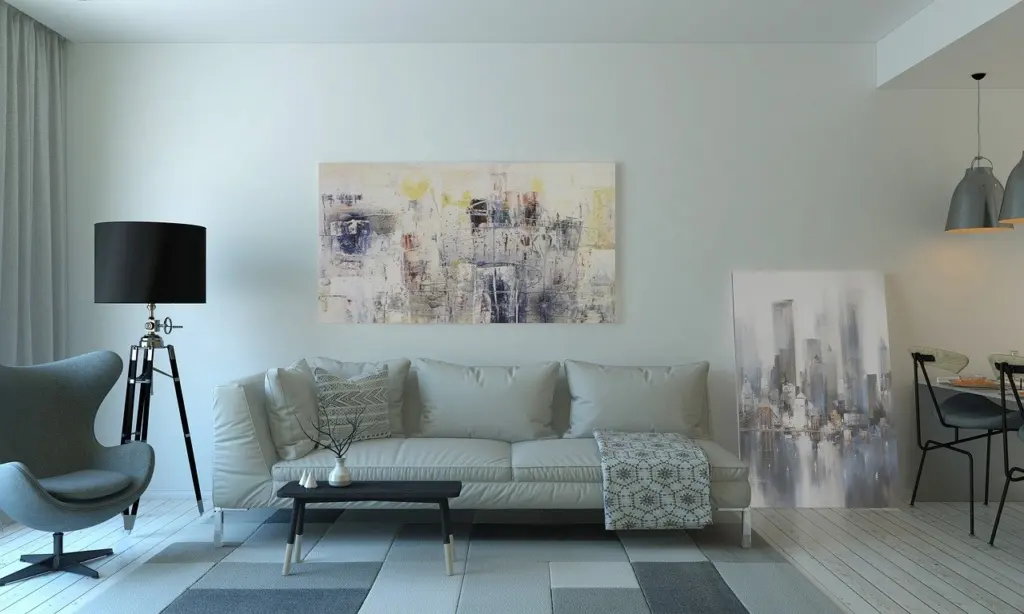
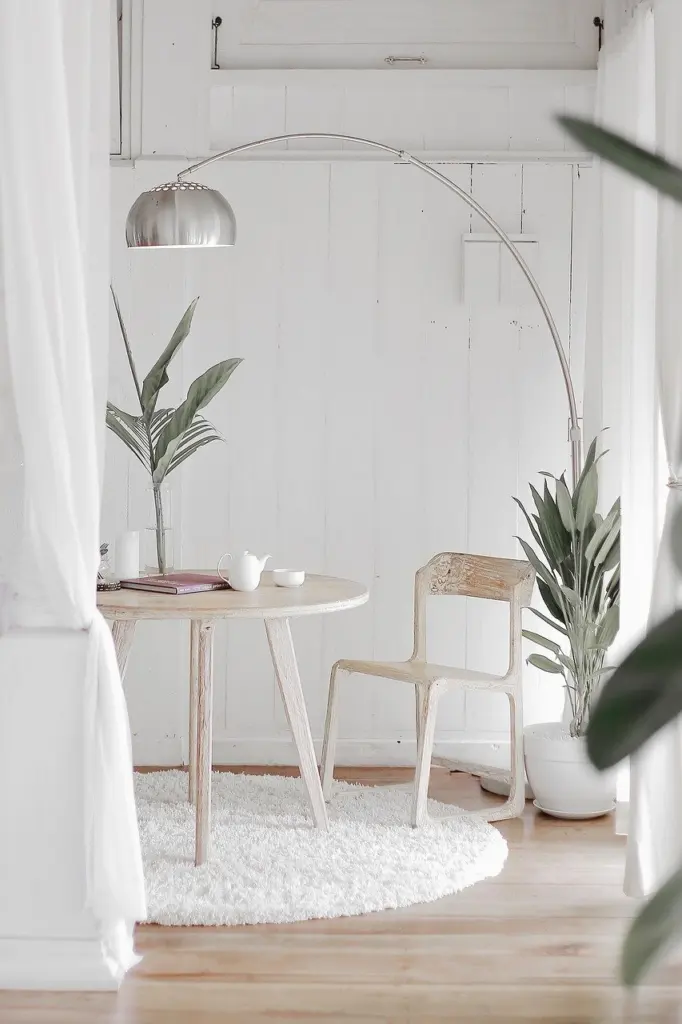
Treat lamps and ceiling lights as part of the same plan. A floor lamp or pendant, such as those visible in the photographs on this page, adds to the room after the daylight fades. Choose curtain and rug tones that look right in both the daytime light you have and the artificial light you add.
Making a small home feel bigger
To make a small home feel bigger, use light fabrics, hang the rod high and wide, and avoid heavy patterns. The curtain guide supports each point.
- Light fabrics: sheers, cottons and light shades reflect light and give the room a fresh appearance. They are the sensible default for a compact living room.
- High and wide rods: mounting rods close to the ceiling and beyond the window frame makes windows and ceilings look larger. It costs nothing extra and is the cheapest change on this list.
- Restrained pattern: heavy patterns can dominate a small room. If you want pattern, use it on a smaller item instead of on large window panels.
Window treatments are only one lever. Layout, furniture scale and storage matter as much, and Small Apartment Living Room Ideas: 15 Stylish, Space‑Savvy Tips For 2026 – Getoku develops those for a single room. If one room has to serve as bedroom, lounge and workspace, Tiny Space, Big Style: 15 Small Studio Apartment Ideas To Maximize Comfort And Function (2026) – Getoku is the better place to look.
Storage and off-season care
Storage affects how a room looks as much as curtains and rugs do, because clutter undoes a tidy window treatment. For furniture that stores things in the main room and entryway, see living room storage ideas.
Storage also applies to the textiles themselves. If you swap curtains with the seasons, the care guide says to roll curtains rather than folding them, which prevents creases. It also says to keep them in a breathable location away from extreme heat or cold. Keep that in mind when you buy: a curtain that creases badly or needs special storage is less convenient for a household with little spare space.
Related guides by situation
Home product choices change with where you live and how much space you have. Use the guides below for the situations the pages above only touch.
Small spaces and first homes
- Compact apartments: Small Apartment Ideas: Practical, Stylish Solutions To Maximize Every Square Foot In 2026 – Getoku covers the whole home, while Small Apartment Patio Ideas: 12 Stylish Ways To Transform Tiny Outdoor Spaces In 2026 – Getoku covers the outdoor corner.
- New renters: First Apartment Checklist: The Ultimate Move-In Guide For New Renters (2026) – Getoku helps you sequence purchases when you are furnishing from scratch.
- Student rooms: Dorm Room Essentials: The 2026 Checklist For A Comfortable, Productive First Year – Getoku suits a single shared room.
Closets and kitchens
- Entry and hall closets: Coat Closet Organization Ideas: 7 Smart Ways To Maximize Space And Cut Morning Chaos In 2026 – Getoku.
- Bedroom and bathroom closets: Walk-In Closet Organization Ideas: Transform Chaos Into Calm In 7 Simple Steps (2026) – Getoku, Small Bathroom Closet Organization Ideas: 15 Smart, Space-Saving Solutions For 2026 – Getoku and Baby Closet Organization Ideas: Calm, Clutter-Free Systems for Busy Parents (2026) – Getoku.
- Kitchen space: Small Kitchen Organization Ideas: 12 Clever Space‑Saving Solutions For Tiny Kitchens In 2026 – Getoku pairs well with a guide to the best type of cookware.
Outdoor living
If you have a balcony or patio, start with the best material for outdoor furniture, because exposed pieces face different demands from indoor furnishings.
Frequently asked questions
Is a vertical seam in a wide curtain panel a defect?
No. Fabric rolls have a fixed usable width, so a vertical seam is normal on wide panels. A curtain fabric guide calls it normal custom-drapery construction, not a defect.
Should I order a fabric sample before buying?
Yes, when exact colour, texture or opacity matters. The same guide says screens cannot reproduce every fibre, finish or dye lot accurately, so a physical sample is the safer check.
Do sheer curtains give privacy at night?
Not reliably. The fabric guide says sheers usually do not provide reliable nighttime privacy, so pair them with a second layer if you need it after dark.
Do synthetic blends suit a sunny room?
They can. A living room guide says synthetic blends often hold their pleats better and fade less in sunlight than pure silk or linen.